Kamikochi Summer Guide: A Slow Escape into the Northern Alps
I say this a lot about the places I’ve visited in Japan, but riding the bus through the Japanese Alps – driving over bridges that overlook stunning, literal turquoise rivers while massive, tree-covered hills roll on and on in the distance – truly feels magical.
The beautiful thing about visiting Kamikochi in the summer is that while the rest of Japan is sweltering, up here you get a refreshing, cool mountain breeze. It’s the kind of air that allows you to just wander until your soul is content, without sweating up a storm. Tucked away in a pristine alpine valley where private cars are completely banned, this car-free sanctuary is a place made for slowing down, listening to the rushing glacial waters, and letting the city noise completely fade away.
Because the valley sits so high up in the Alps, it is covered in deep snow by winter for half the year. Kamikochi is only open from mid-April to mid-November, so you will need to plan your journey within this seasonal window.
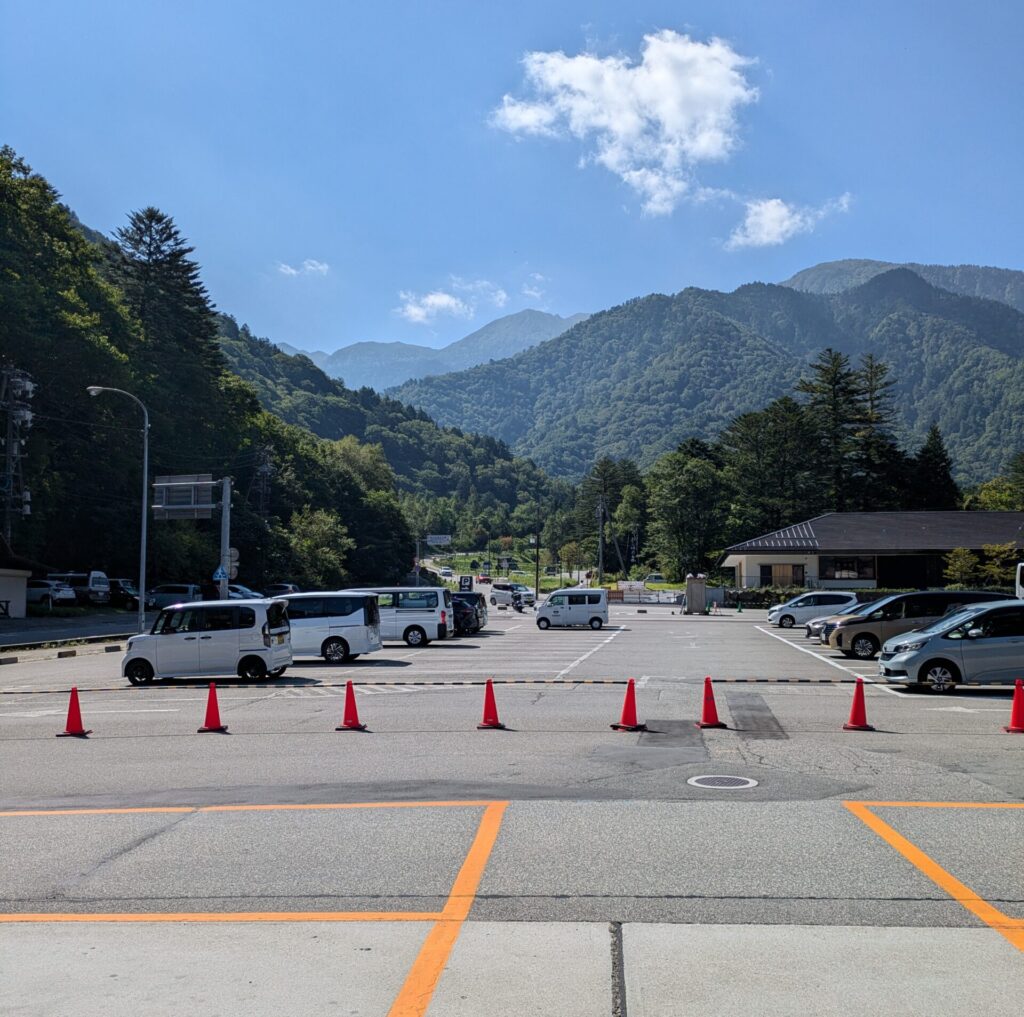
As I mentioned, there are no cars here – and no trains either. Because Kamikochi is a protected alpine environment, the road is completely closed to private traffic and rental cars. Instead, everyone must pass through one of two gateway hubs at the base of the mountains to transfer to a public bus or a local taxi.
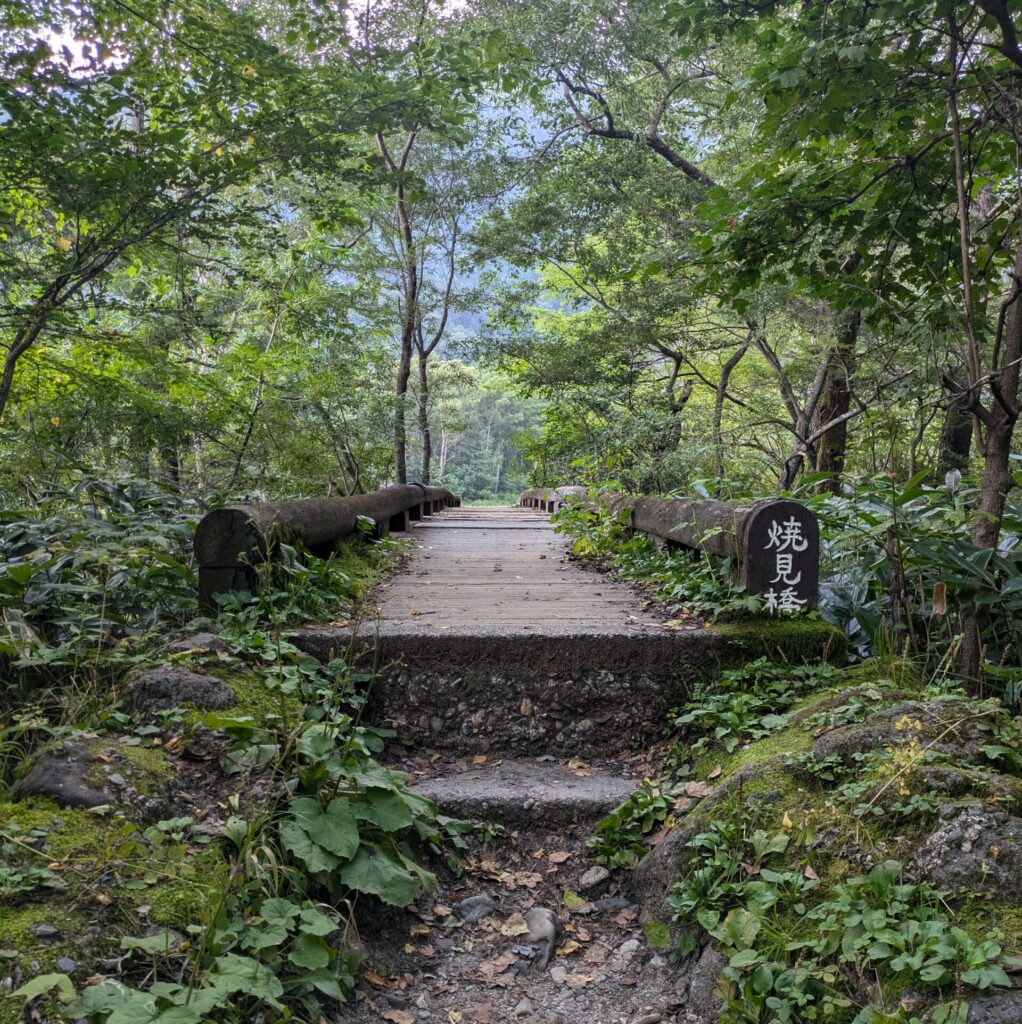
Getting There
Whichever side of the Japanese Alps you are approaching from, it takes a little careful, but not difficult, planning:
- From the West (Takayama/Kanazawa side): Your transfer hub is Hirayu Onsen, a rustic hot spring town nestled in the foothills. We headed up this way after our time in Takayama, though many travelers come after visiting Kanazawa and work in a stop at the famous thatched roofs of Shirakawa-go on their way.
- From the East (Matsumoto/Tokyo side): Your gateway hub is a small area called Sawando.
If you are traveling as a family or a small group, you don’t need to stand in the massive morning bus lines if you would prefer a smoother ride. A taxi directly from Hirayu Onsen or Sawando into the valley runs on a fixed rate (usually around 4,500 to 5,000 yen). When you split the cost across three or four people, it works out to be almost the exact same price as individual bus tickets, but you get to head up into the fresh mountain air entirely on your own schedule.
Whichever route you choose, it just takes a little careful, but not difficult, planning. The reward is being transported to a place on earth that will stay with you long after you’ve left.
Where to stay
Whilst a day trip is a must if that’s all you can fit in, staying even one night will be an experience you’ll never forget. once all the day trippers and buses depart at around 5 pm, Kamikochi transforms. The quiet sounds of the river flowing, the clear starry sky as you settle in for the evening, and the sun that rises over the misty mountains on your morning walk.
Depending on your budget and how you like to travel, here are the three best ways to do it:
The Immersive Option: Konashidaira Campsite
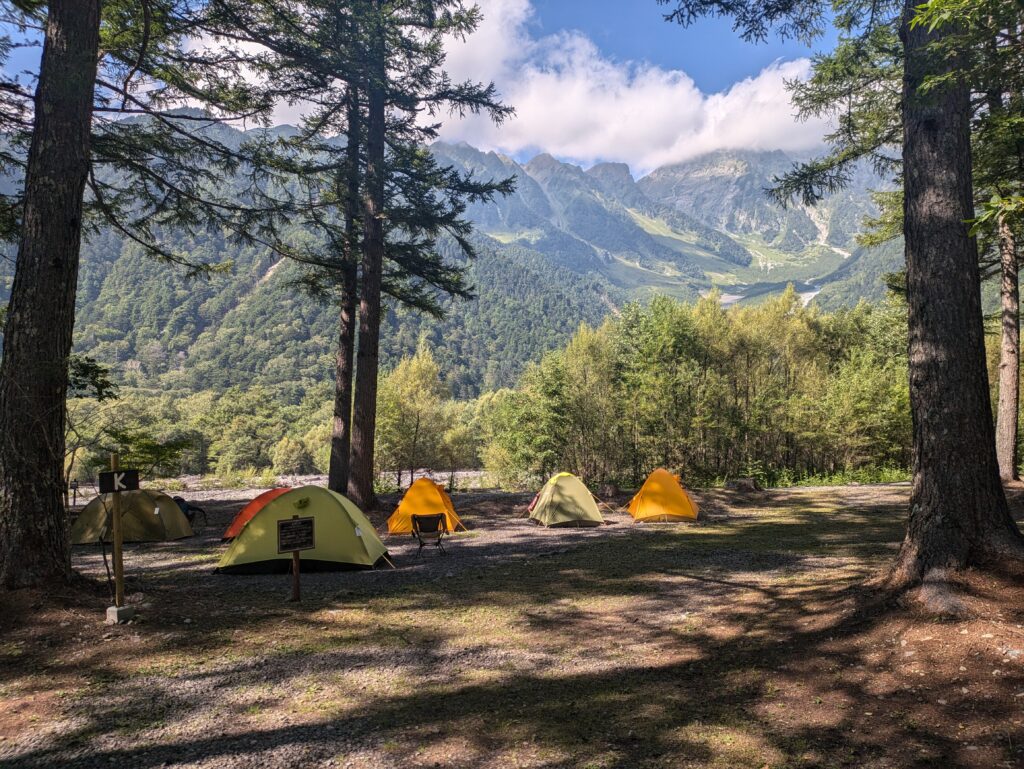
If you like to really immerse yourself in the environment, this is my number one recommendation. It is just a short, flat walk from where the bus drops you off. You can pitch a tent, but they also have rustic little wooden cabins if you want a solid roof over your head. It is right in the trees by the river, and it has everything you actually need – a small grocery shop, a casual restaurant (that has amazing spaghetti bolognaise randomly), and hot public baths to soak in after walking all day. It is just a really peaceful, down-to-earth place to base yourself.
The Mid-Range Option: Kamikochi Onsen Hotel
If a cabin is too rustic but you don’t want to spend a fortune, this is a great middle ground. It is a traditional Japanese hotel right by the river, and its biggest selling point is that it has actual, natural volcanic hot springs (onsen) fed straight from the mountains. You get a comfortable room, a traditional dinner and breakfast included, and a proper indoor/outdoor bath to relax in.
The Splurge Option: Kamikochi Imperial Hotel
This is the big, iconic red-roofed building you see in all the photos. It looks like a massive mountain chalet and it is definitely a luxury splurge. If you want a really high-end experience in the middle of the woods – think massive stone fireplaces, incredible service, and top-tier food – this is where you go to treat yourself.
While these are three completely different ways to experience the valley, there are only about twenty places to stay in Kamikochi in total, including basic mountain lodges and a couple of other riverside hotels. Because space is so limited in the national park, whichever style you choose, make sure to book it well in advance before the season kicks off.
Things to Do (Besides the Hikes)
Because Kamikochi is a protected national park, you won’t find shopping streets or amusements here. The activities are all about slowing down, practicing mindful travel, taking in the scenery, and enjoying the mountain atmosphere. Here are the best things to do around the main hub:
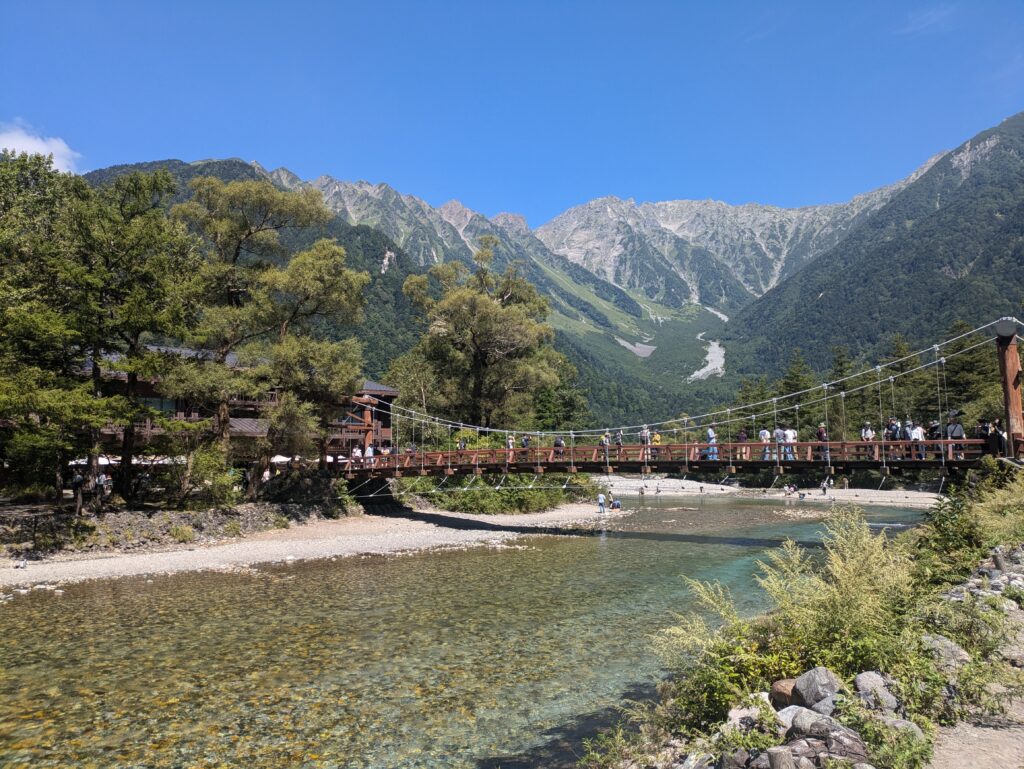
1. Stand on Kappa Bridge (Kappabashi)
This is the iconic wooden suspension bridge right in the center of the valley, and it’s pretty much the default landmark everyone visits. Standing on the bridge gives you a totally unobstructed, front-row view of the massive jagged peaks of the Mount Hotaka range, with the crystal-clear, bright turquoise river rushing right beneath your feet. It does get very busy during the middle of the day, but if you are staying overnight, coming here at sunrise or dusk when it’s completely empty is unforgettable.
2. Grab a Local Meal at Kamikochi Diner (Kamikochi Shokudo)
If you want a classic Japanese lunch, head to the second floor of the main bus terminal building. This diner is a casual spot to grab hearty Teishoku (Japanese set meals) like pork katsu, soba noodles, or local mountain vegetable dishes. They also sell great bento box lunches if you want to grab food to take out by the river, plus a local snack called Kappa Yaki—a sweet pancake shaped like the area’s mythical water imp.
3. Visit the Free Visitor Center
Located just a short walk from Kappa Bridge, the Kamikochi Visitor Center is entirely free to enter and definitely worth a quick stop. It is a really beautiful timber building filled with exhibits on the local wildlife (including the area’s famous wild monkeys), the volcanic history of how the valley was formed, and the mountain culture. It is a great place to duck into if it starts raining or if you just want to understand the environment you are walking through, It’s also a great spot for grabbing some souvenirs!
4. Check out the Weston Monument
If you follow the flat path along the south bank of the river for about 15 minutes downstream from Kappa Bridge, you’ll stumble into a bronze plaque set directly into the rock face. This is the Walter Weston Monument. He was an English missionary back in the late 1800s who fell in love with these mountains and essentially introduced the concept of recreational mountain climbing to Japan. It’s a cool piece of history, tucked away in a really peaceful, shaded section of the woods.
Where to Wander
Being an alpine national park, there are many places to wander. You don’t need to be an avid hiker to enjoy what kamikochi has to offer, just wandering along the river, taking it all in or wandering around the tracks at the campgrounds is stunning. if you want some direction, here are a few hikes, grouped by length that you can choose from, however, the choices really are endless…
Short Walks (Under 1 Hour)
Kappa Bridge to Tashiro Bridge Loop (Approx. 40–50 mins total): If you just want a gentle, completely flat stroll, walk downstream from Kappa Bridge along either side of the Azusa River. You will cross over Tashiro Bridge and head back up the opposite bank. The paths are wide, well-maintained, and give you constant views of the rushing water and the mountains.
Mid-Length Walks (1 to 2 Hours)
Kappa Bridge to Taisho Pond (Approx. 1 hour one-way / 2 hours return): Head downstream toward the iconic Taisho Pond. This walk takes you through forested boardwalks and open marshes. The pond itself was formed by a volcanic eruption and still has dead trees standing right out of the water, reflecting the mountains like a giant mirror. Tip: You can walk down here, and catch the shuttle bus back to the main terminal from the Taisho Pond bus stop if you don’t want to walk back.
Half-Day Walks (3 to 4 Hours)
Kappa Bridge to Myojin Pond (Approx. 2.5 to 3 hours return): Head upstream from Kappa Bridge toward the sacred Myojin Pond. The path winds through quiet woods and over raised wooden boardwalks where you often spot wild ducks and monkeys. When you reach the pond (located inside a shrine ground, with a small entry fee), you’ll find a beautifully still, mystical lake right at the base of a massive rock face. There is also a great little traditional hut near the pond where you can get fresh, salt-grilled river trout for lunch.
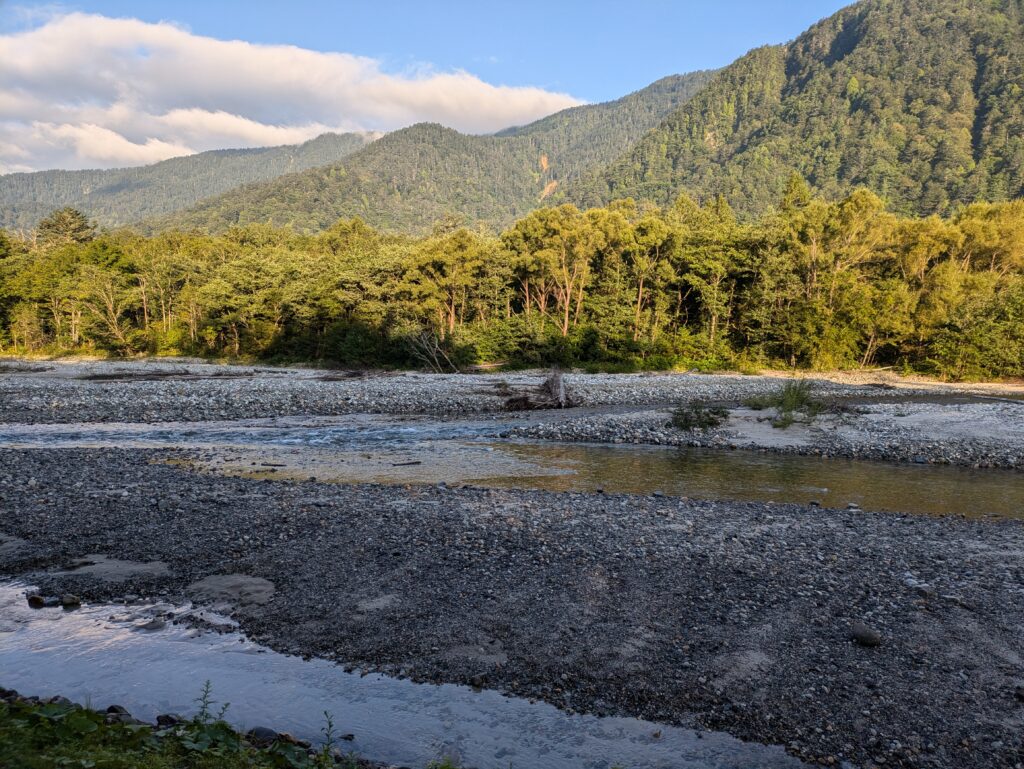
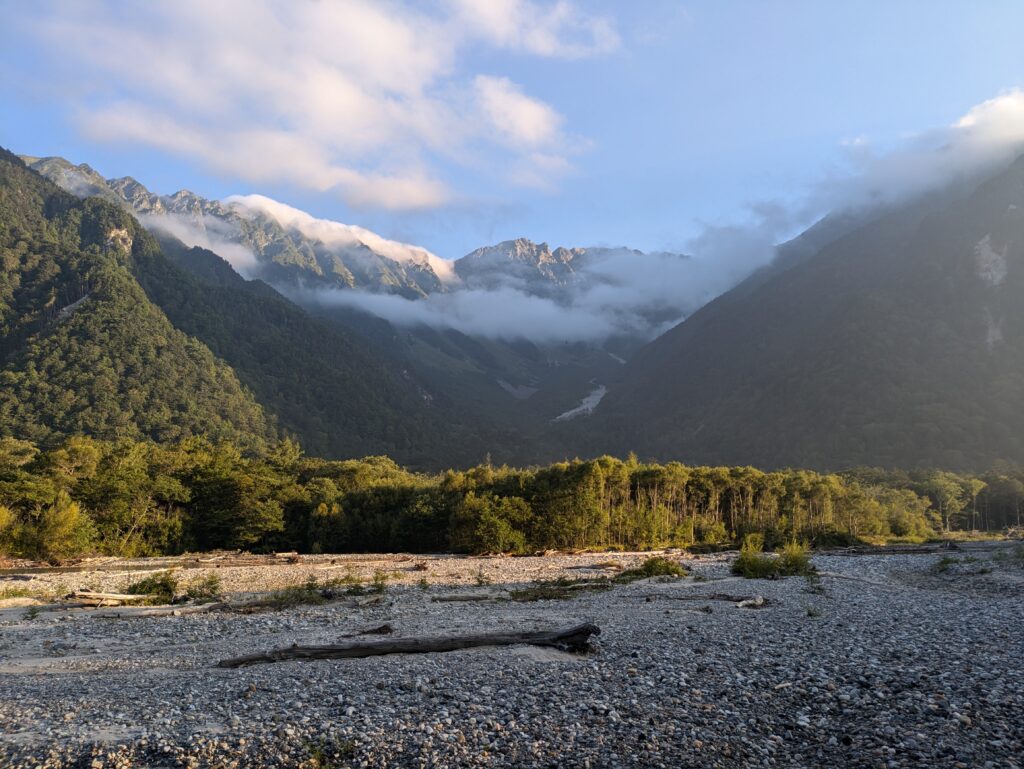
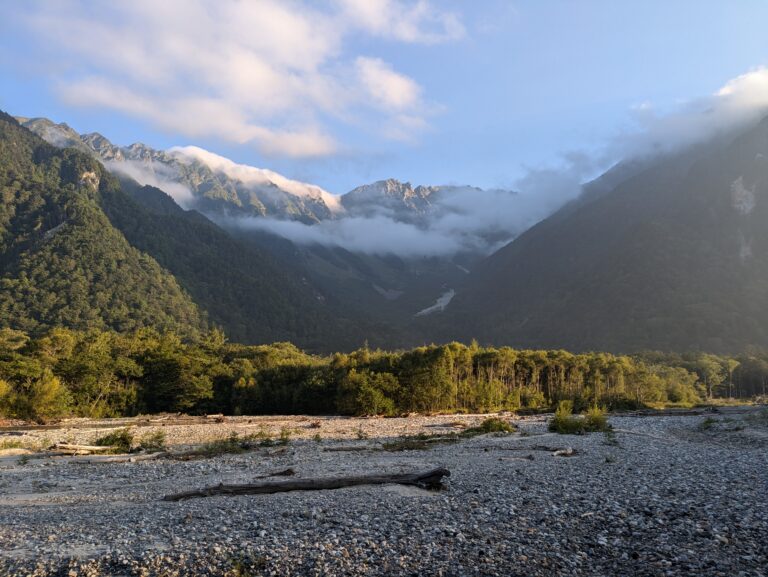
Golden hour hitting the tree-line right along the river bank. 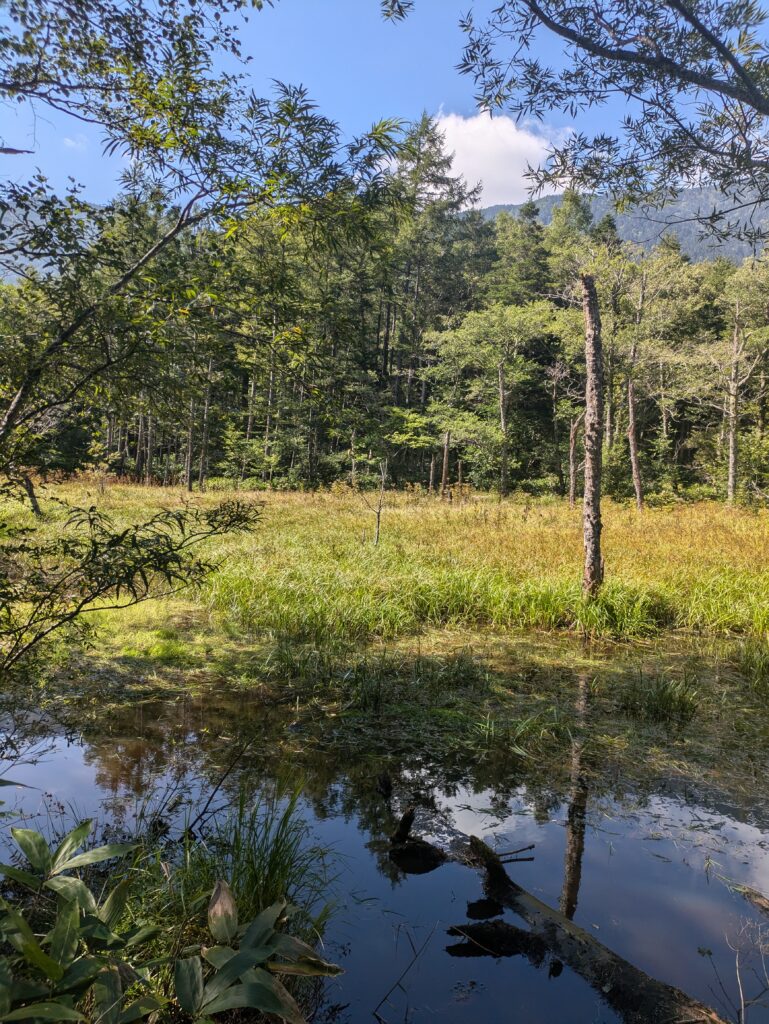
The scenery constantly transitions from thick forest boardwalks into wide open marshlands. 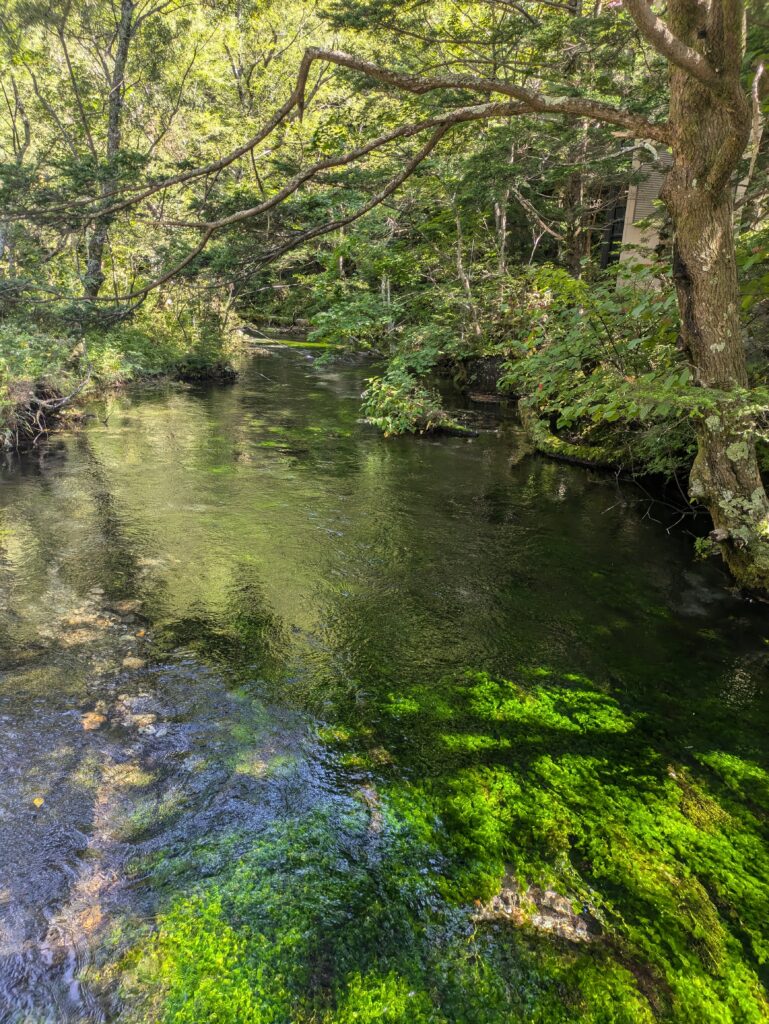
Seriously, the water throughout the entire park is unbelievably clear. 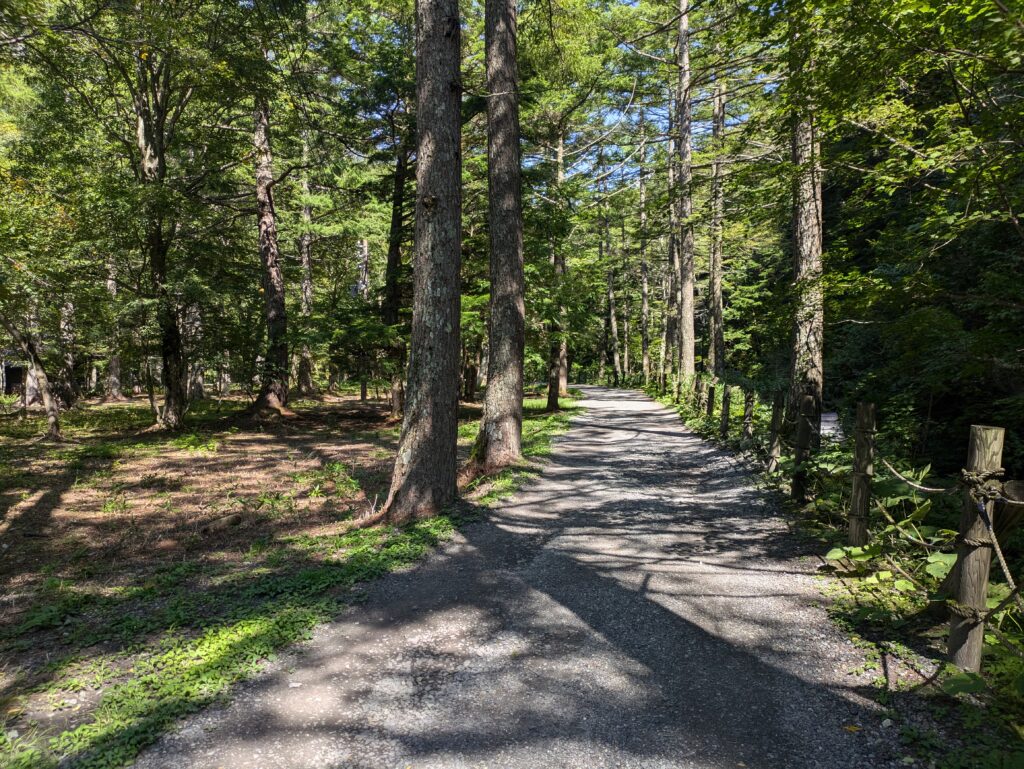
Even the flat, main walking paths are completely surrounded by massive pine trees.
Sharing the Valley with the Wildlife
One of the coolest parts about Kamikochi being a strictly protected reserve is that you are highly likely to share the trails with the local wildlife. However, because these animals are completely wild, there are a few basic ground rules to keep both you and them safe.
While standard japanese etiquette covers how to navigate shrines and cities respectfully, alpine environments like Kamikochi have their own strict rules to protect the local ecosystem.
The Wild Monkeys (Japanese Macaques)
You will almost certainly see troops of macaques hanging out on the paths, grooming each other, or climbing trees—and yes, they frequently wander right through the campgrounds. While rangers do their best to keep them out of the main camping areas, they can’t police them 24/7.
- Keep your distance: Do not try to get close for a selfie.
- Avoid eye contact and smiling: In monkey language, staring directly into their eyes or baring your teeth (even a friendly smile) is seen as a sign of aggression. Just look away and walk on past.
- Never feed them: Feeding wild monkeys alters their behavior and makes them aggressive toward future hikers.
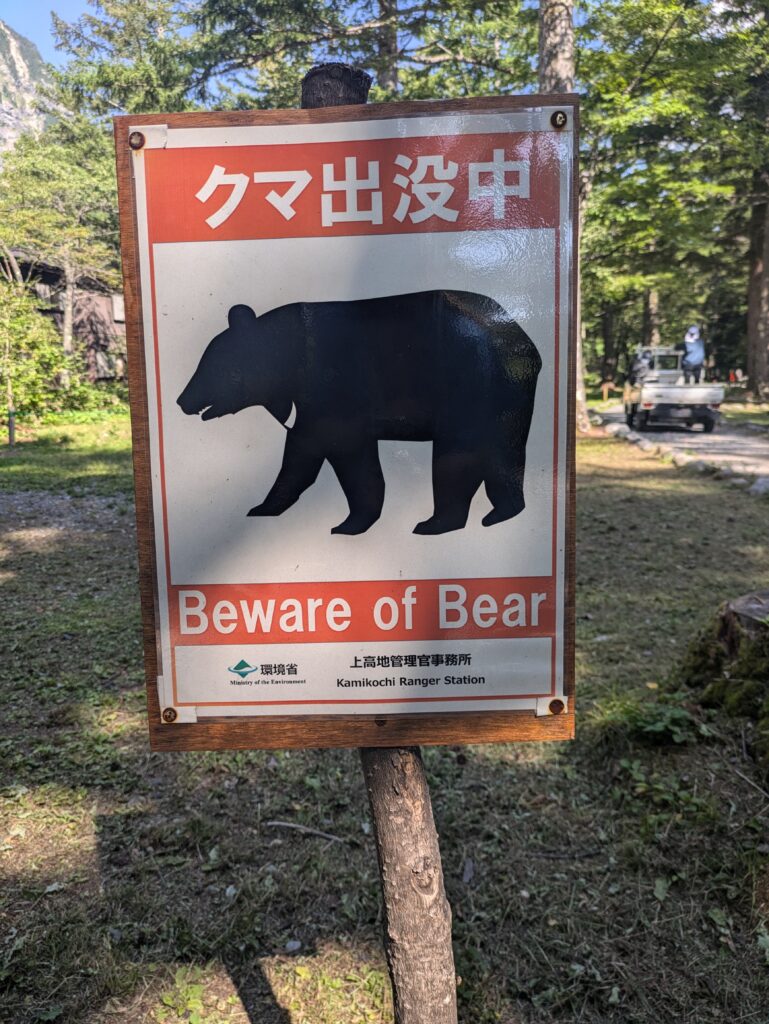
The Asiatic Black Bears
Yes, there are wild black bears in the valley. They are generally very timid and prefer to avoid humans, but surprise encounters can happen.
- Check the sighting signs: The visitor center and trailheads regularly post signs detailing exactly when and where a bear was last spotted. Keep an eye on these before you set off.
- Make your presence known: Bears are most active at dawn, dusk, and on rainy days. It’s standard practice here to clip a little “bear bell” to your pack so they can hear you coming and move away before you startle them.
- Store food properly: If you are camping at Konashidaira, you must use their secure, designated food lockers for your food and trash. Keeping food inside your tent is a massive safety hazard.
- If you see one: Stay calm, do not run away (running triggers their instinct to chase), do not stop to take photos, and slowly back away while keeping your eyes on it.
Kamikochi Rubbish and Trash Rules
Aside from the wildlife, the most important rule to know before you start walking is about your rubbish. Because Kamikochi is a strictly protected environment, there are zero public bins out on the trails, at the viewpoints, or at the main bus terminal. Anything you bring with you for the day—from water bottles to food wrappers—must stay in your pack. If you are staying overnight at the Konashidaira campsite, they do have a dedicated trash station for guests, but if you are just passing through for the day, plan to carry every single bit of your trash completely out of the valley with you.
Final Thoughts
Whether you only have a few hours to wander or you’re spending the night under a massive blanket of stars at the campsite, Kamikochi has a way of completely slowing down time. You’ll find yourself actually looking up at the scenery rather than looking down at your phone.
It definitely takes a little extra planning and a couple of bus transfers to get yourself up into the Alps, but the exact moment you step off the bus and hear the river rushing through the valley, you’ll realize it was worth every single bit of the effort. It’s just one of those rare places that stays with you long after you’ve left.