Beyond the Castle: A Wanderer’s Guide to the Soul of Kumamoto
When you Google search for Kumamoto, you’re usually met with three things: the castle, the famous black mascot Kumamon, and a map of where to find the One Piece statues. Most guides will tell you that a half-day—maybe a full day if you’re “doing it properly”—is all you need before moving on. I fell for it too.
I planned Kumamoto as a quick stopover at the start of our Kyushu road trip. The plan was simple: see the castle and surrounds, sleep, and head toward the Aso caldera by morning. It’s one of my biggest regrets from our itinerary. I realized almost immediately that I had barely scratched the surface of a city that deserves a deeper look.
I’m a slow traveler. I like to wander. I like the quiet discoveries that are only awarded to those who take the time to just be. I’m not suggesting you show up without a plan; I just think you should leave space for the unexpected. The best parts of Kumamoto are the ones that aren’t on the ‘must-see’ lists.
When I drafted my 10-Day Kyushu Itinerary, I added an extra night here. Not because there’s another “must-see” monument, but because Kumamoto is a city that rewards the lingerer. It’s a place that has been broken and rebuilt over and over—from the 1877 rebellion to the massive 2016 earthquake. You see it in the castle walls that are still being put back together, and you feel it in the old merchant streets like Shinmachi that were designed centuries ago for the city’s blacksmiths and artisans.
If you’re like me and you’d rather find a 200-year-old miso shop or a quiet hilltop temple than a photo-op with a mascot (as cute as he is), this guide is for you.
Where to Stay in Kumamoto
Most travel guides will point you toward the neon lights of Shimotori or the convenience of Kumamoto Station. If you’re looking for the heart of the city, I’d suggest looking elsewhere.
That being said, those central spots aren’t “wrong”; they just serve a different purpose. I want to point out that they aren’t your only choices, especially if you have a car or a bit more time.
The North Castle Hills (Chuo Ward)
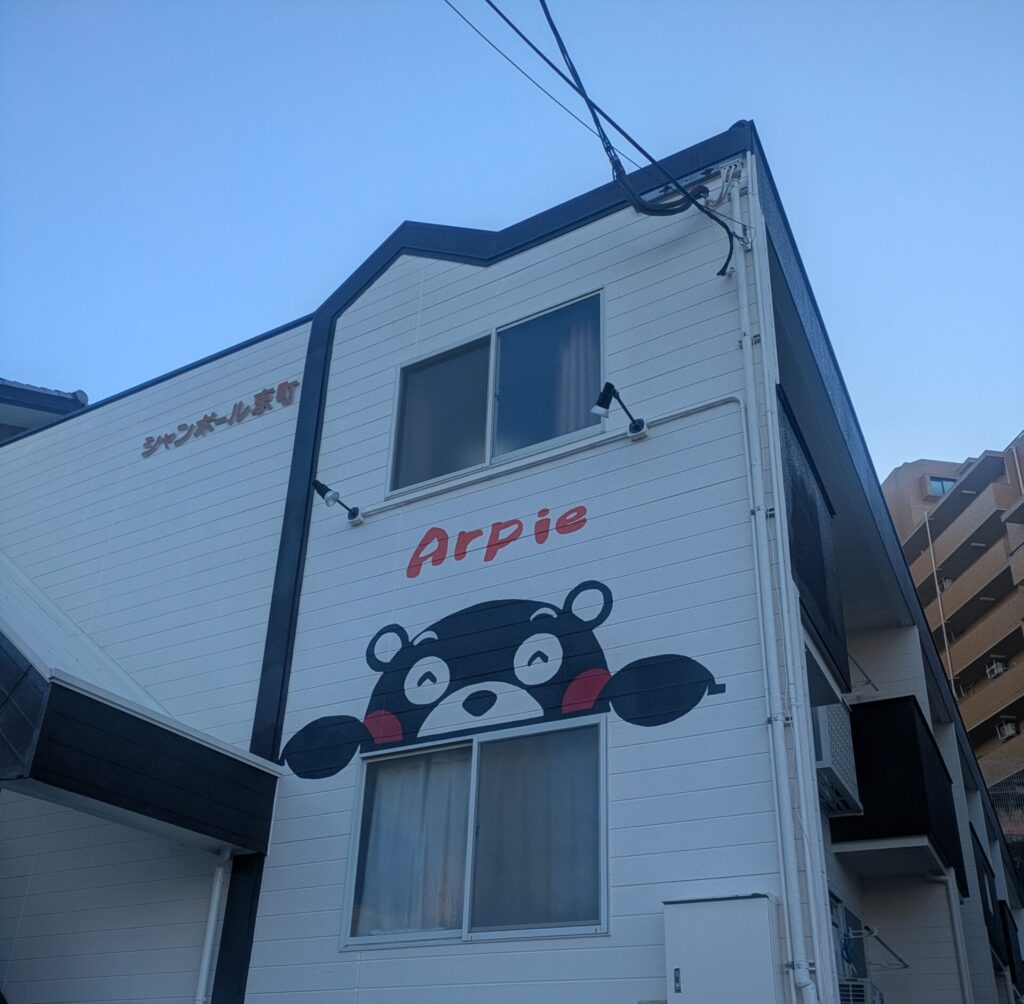
This is where I stayed. Our apartment was a simple, bare bones studio apartment, but the location was perfect for me. Tucked into the steep, sloping residential streets just north of the castle grounds, this area made me feel like i was just going home. Its quiet and authentic, You’ll hear school bells and see locals walking dogs rather than tour groups.
- Why Stay Here: For the peace and quiet, the local atmosphere and to see another side of Kumamoto. It’s perfect for families (there was an old-school 90s playground right across from us) and slow travelers who want to feel like they actually live in Kumamoto for a few days.
The Artisan Districts: Shinmachi & Furumachi
If you want to stay on flat ground but still avoid a generic hotel feel, look for small guesthouses in these historic merchant areas. feels like stepping back into the Edo period without the museum ropes.
- Why Stay Here: You’re in the heart of Kumamoto’s craftsmanship history. It’s the perfect base if you want to wake up and immediately be in an area worth wandering on foot.
Shimotori & Sakuramachi (Downtown)
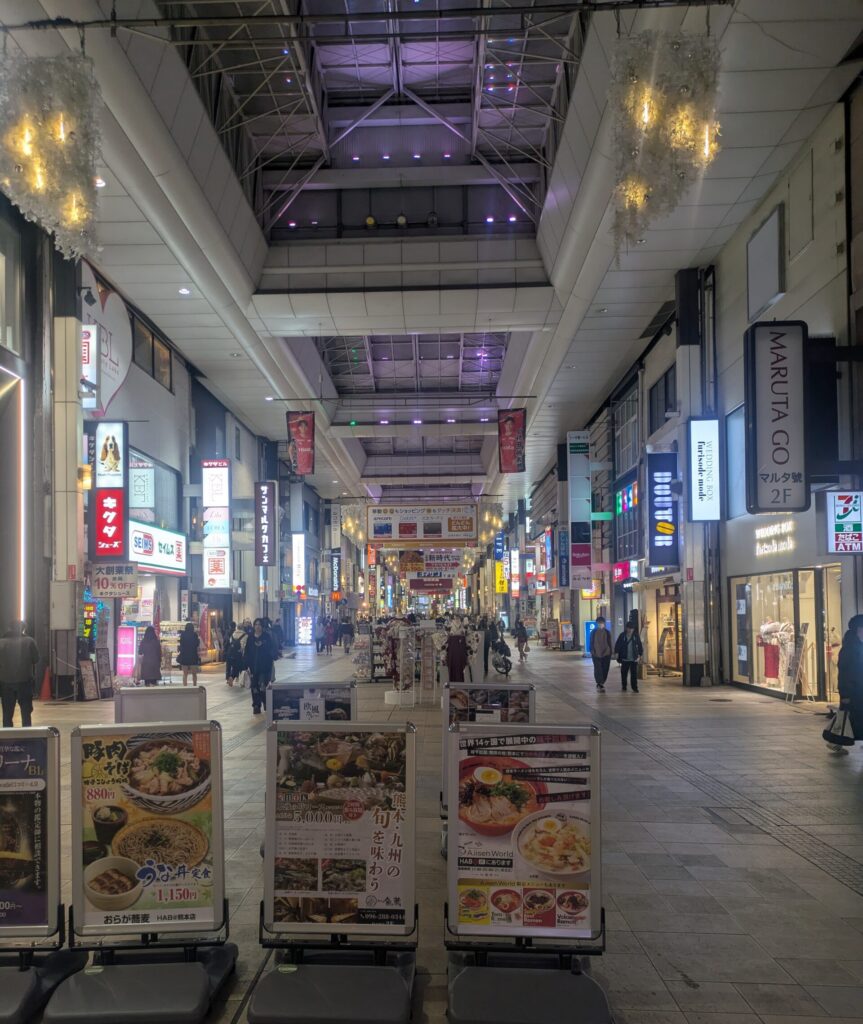
This is the city’s commercial area. It’s bright, busy, and where most of the “action” happens after the sun goes down. Neon lights, crowded shopping arcades, and a high-energy city buzz.
- Why Stay Here: Convenience for food and nightlife. Stay here if you want to be within walking distance of a Basashi (horse meat…not for me but maybe for you!) dinner and the city’s best izakayas. It’s also right next to the main bus terminal.
Kumamoto Station Area
A few kilometers away from the castle and the “old” city, this area has been heavily redeveloped and feels very modern.
- Why Stay Here: It’s the best spot for a late-night Shinkansen arrival or an early-morning departure. Just be aware that you’ll be jumping on the tram to see almost everything else on this list.
Things to do in Kumamoto
Kumamoto doesn’t have the immediate beauty and grace of Kyoto; instead, it has a rugged, weathered kind of charm. It is a place defined by its ability to endure—whether that is the literal rebuilding of its castle walls stone by stone or the way it has harnessed the volcanic water that flows beneath its streets.
Because we only had a short time, we couldn’t see everything. Below are the places that made the deepest impression on me, alongside a few spots that I’ve already bookmarked for our return trip.
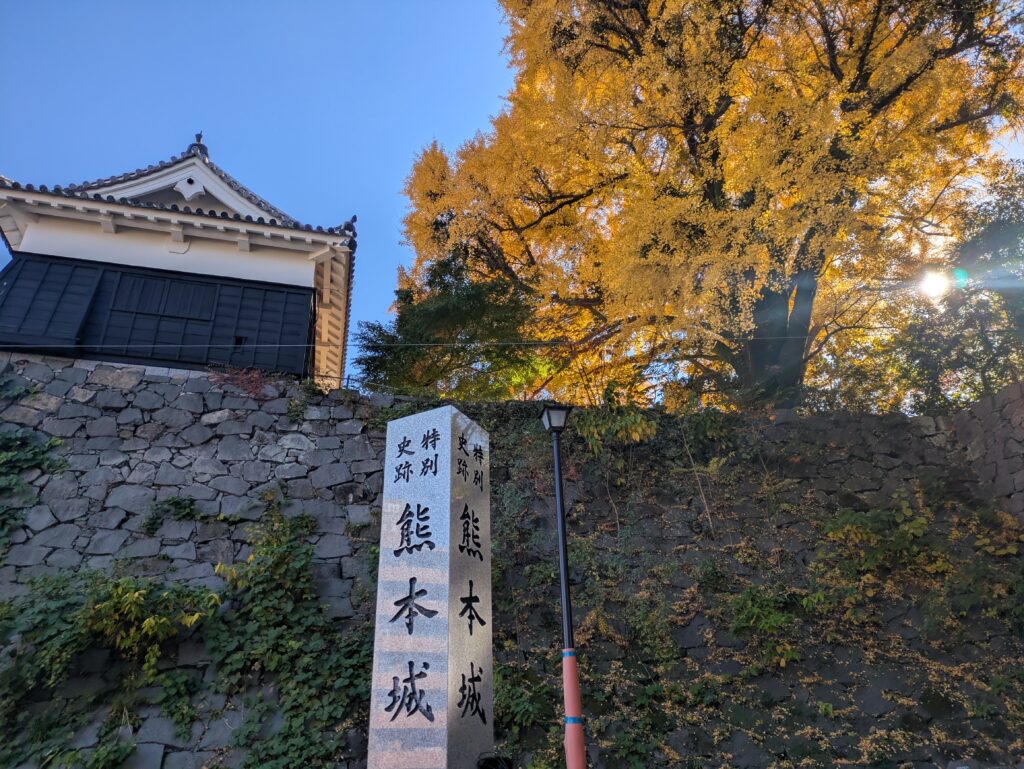
1. Kumamoto Castle (The Ginkgo Castle)
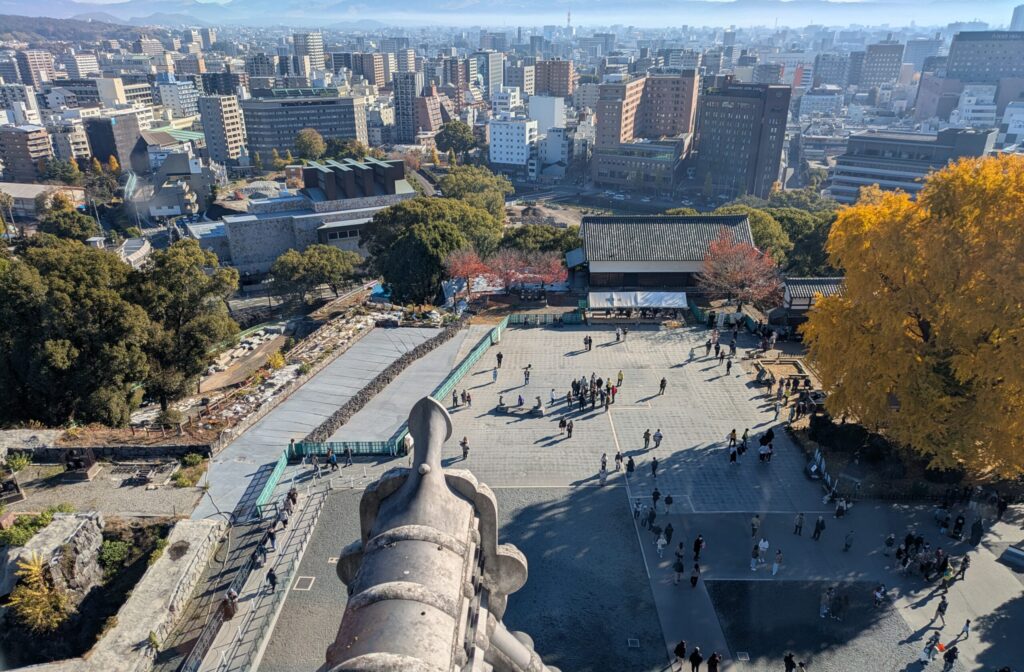
This isn’t just a ‘sight’ to tick off your to-do list; it’s living history. After the 2016 earthquake, the castle was severely damaged, Seeing the stones laid out like a giant puzzle shows you exactly how much work goes into putting this place back together.
- The Experience: As you walk the elevated pathways, look for the thousands of numbered stones laid out on the ground like a giant puzzle. Each one is waiting to be returned to its original place in the walls.
- Cost: 800 yen. If you want to see the museum (Wakuwakuza) too, the combo ticket is 850 yen.
- Getting There: A 5-minute walk from the Kumamoto-jo/Shiyakusho-mae tram stop.
2. Lafcadio Hearn’s Residence
I loved this small, unassuming wooden house. Hearn was one of the first Westerners to truly “see” Japan and write about its folklore and soul.
- The Experience: It is a very simple space, but it evokes a specific kind of Meiji-era solitude.
- Cost: 200 yen.
- Getting There: Tucked behind the Tsuruya Department Store downtown. It’s an easy 10-minute walk from the castle grounds.
3. Suizenji Jojuen Garden
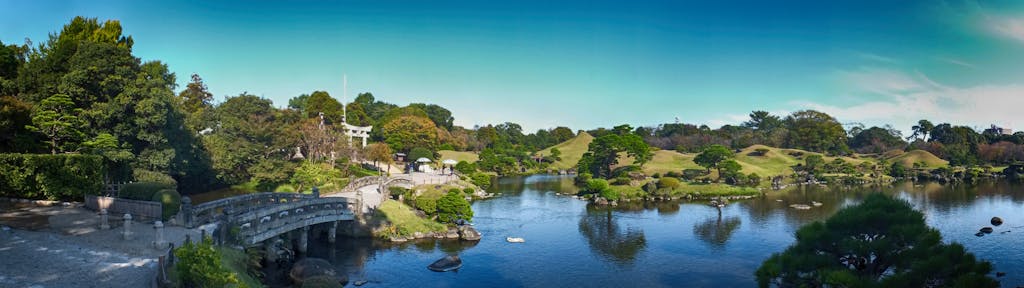
This is one of the most unique gardens in Japan, designed to be a miniature “map” of the Tokaido (the ancient road between Kyoto and Tokyo).
- The Experience: Features a perfectly manicured mini-Mt. Fuji and is fed by a crystal-clear volcanic spring.
- The Slow Moment: Go to the Kokin-denju-no-ma teahouse. Order the matcha and seasonal sweet (around 600 yen) and just watch the carp move through the spring water.
- Cost: 400 yen.
- Getting There: Take the tram to the Suizenji Koen stop.
4. Reigando Cave (The Cave of Spirit)
If you have a car and want to head a little further out of the city, this is the ultimate pilgrimage.
- The History: This is the cave where the legendary swordsman Miyamoto Musashi spent his final months writing The Book of Five Rings.
- The Path: You’ll walk past the 500 Arhats—stone statues on a mossy hillside, each with a different face.
- Cost: 200 yen (entrance to Unganzenji Temple grounds).
- Getting There: About a 20–30 minute drive from the city center. If you’re on the bus, take the city bus toward Iwato Kannon and expect a 20-minute uphill walk.
5. Honmyo-ji Temple
Tucked into the hills north of the castle, this is where the great builder of the castle, Kato Kiyomasa, is buried.
- The Climb: A long, steep staircase lined with stone lanterns leads up to a statue of Kiyomasa. The reward is the best “un-hyped” view of Kumamoto city and the castle standing guard.
- Cost: Free.
- Getting There: Take the tram to Honmyoji-mae and walk about 10 minutes to the base of the stairs.
6. Mt. Aso
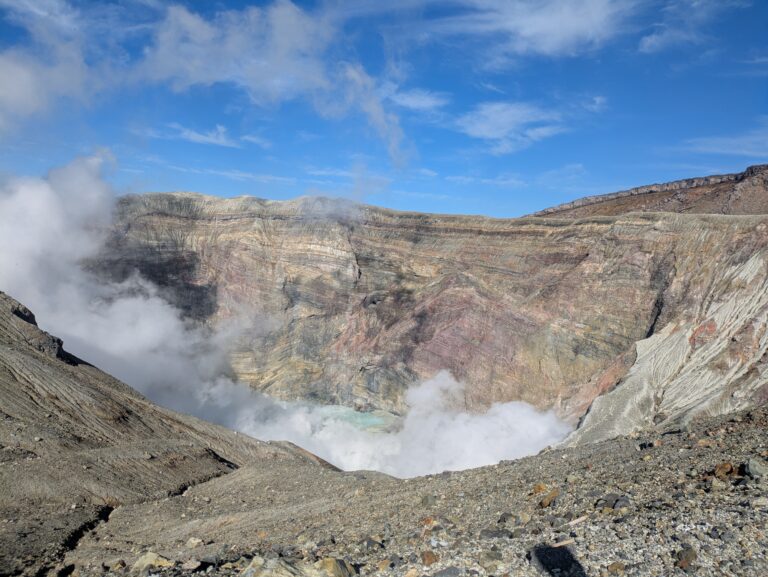
While this guide is about the city, it’s impossible to ignore the massive volcanic spirit sitting just to the east. For many, Kumamoto is the gateway to Aso—one of the most otherworldly landscapes you will ever see. If you are interested in adding Mt. Aso as a stop on your itinerary (and you really should be!), I have a separate [guide to Mt. Aso] that gets into the nitty-gritty of the how, what, and when.
- The Experience: A vast, emerald caldera with an active smoking crater at its center. It is raw, primordial, and completely different from the city’s refined history.
- The “Half-Day” Dash: If you have a car and are willing to start early (around 7:30 AM), you can actually see the main sights and be back in Kumamoto by 1:00 PM. It’s about a 75-minute drive to the top, giving you time to stand at the crater’s edge and explore the Kusasenri plateau.
- On the Way: If you aren’t returning to the city, pick up your rental car, spend your morning on the volcano, and continue your drive toward Kurokawa or Takachiho.
- Note: Always check the Aso Volcano Disaster Prevention website before you leave, as the crater closes frequently due to gas levels.
Where to wander in Kumamoto
This is the part of the city that doesn’t have an entrance fee, where you can get lost in your surroundings and be rewarded with whatever comes your way. It’s just about the atmosphere you find when you stop looking at the map. The side of the city that may not be in the brochure.
Lake Ezu
If you want to see where the locals actually go, head here. It’s fed by hundreds of thousands of tons of natural volcanic spring water every day.
- The Vibe: It’s a massive natural escape. You’ll see kids splashing in the shallows and people filling bottles with water straight from the ground because it’s so clean.
- The Walk: There’s a path that loops around the water. It’s a great place to just walk without an itinerary, watching the birds and the sunset. It’s a literal “breath of fresh air” away from the city center.
Shinmachi & Furumachi
I mentioned these as great places to stay, but they are even better for walking. These neighborhoods survived the fires of the 1877 rebellion and the 2016 earthquake, and you can feel that history in the low-slung wooden buildings.
- What to look for: Don’t look for landmarks; look for the miso shops that have been there for 200 years, or the tiny independent galleries and cafes tucked into old storehouses.
- The Feeling: Walking around here feels peaceful and quiet; you can see the age in the heavy wooden doors and old storehouses.
Shimotori & Kamitori Arcades
For a complete change of pace, spend an hour in the city’s covered shopping arcades.
- The Experience: Even if you aren’t a shopper, the scale of these is impressive. It’s a high-energy look at modern Kumamoto life.
- The “Find”: Turn off the main path into the smaller side alleys. This is where you’ll find the best izakayas and hole-in-the-wall bars that come alive after dark.
Tips for the Journey
- The Castle Break: If you’re visiting the castle, avoid the overpriced tourist stalls right at the entrance. Instead, walk five minutes into Sakuramachi for a massive variety of local food that isn’t just aimed at travelers.
- The Groundwater Refresh: You’ll notice fountains and taps around the city—this is natural volcanic spring water. It’s some of the best water in the world. Carry a reusable bottle and fill it up as you go; it’s a small, local luxury that’s completely free.
- The “Slow Travel” Mid-day Pause: Kumamoto can get surprisingly humid. If you’re staying near the castle or the North Hills, head back for an hour in the afternoon. Let the tour groups finish their “half-day” rush, then head back out when the light softens and the city settles into its evening rhythm.
- The Evening Atmosphere: Even if you aren’t staying in the downtown arcades, walk through Shimotori after 7:00 PM. It’s where you’ll find the best Basashi (horse meat) and local izakayas. It’s the perfect way to see the city’s modern energy before retreating to the quiet of your neighborhood.
A final thought on Kumamoto
I left Kumamoto with a sense that I missed out on something, and that something wasn’t anything in particular—it was that I didn’t even get a chance to experience the city to its fullest. I know we could spend months in any town and not get to experience everything, but for me, Kumamoto deserved more than the guides told me.
In this city that has been broken and put back together more times than most, you can feel that resilience in everything from the numbered stones of the castle to the quiet pride the locals take in their streets.
If you’re heading to Kyushu, don’t just treat this city as a transit stop for the volcano. Give it the time it asks for, walk the streets without a plan, and let the city show you why it’s worth the linger.