Lost in the Magic: A Ghibli Museum 2026 Guide
“Let’s get lost together.”
These are the words Hayao Miyazaki chose to welcome you to the Ghibli Museum in Mitaka, a city around 35 minutes by train and bus from Shinjuku Station in Tokyo. In a world that demands we follow Google maps and stick to strict schedules, this museum of wonder asks you to do the opposite.
There is no set path, no “right” way to see the exhibits, and a strict no-photo policy once you step through the museum doors, encouraging you to put your phone away and just be there.
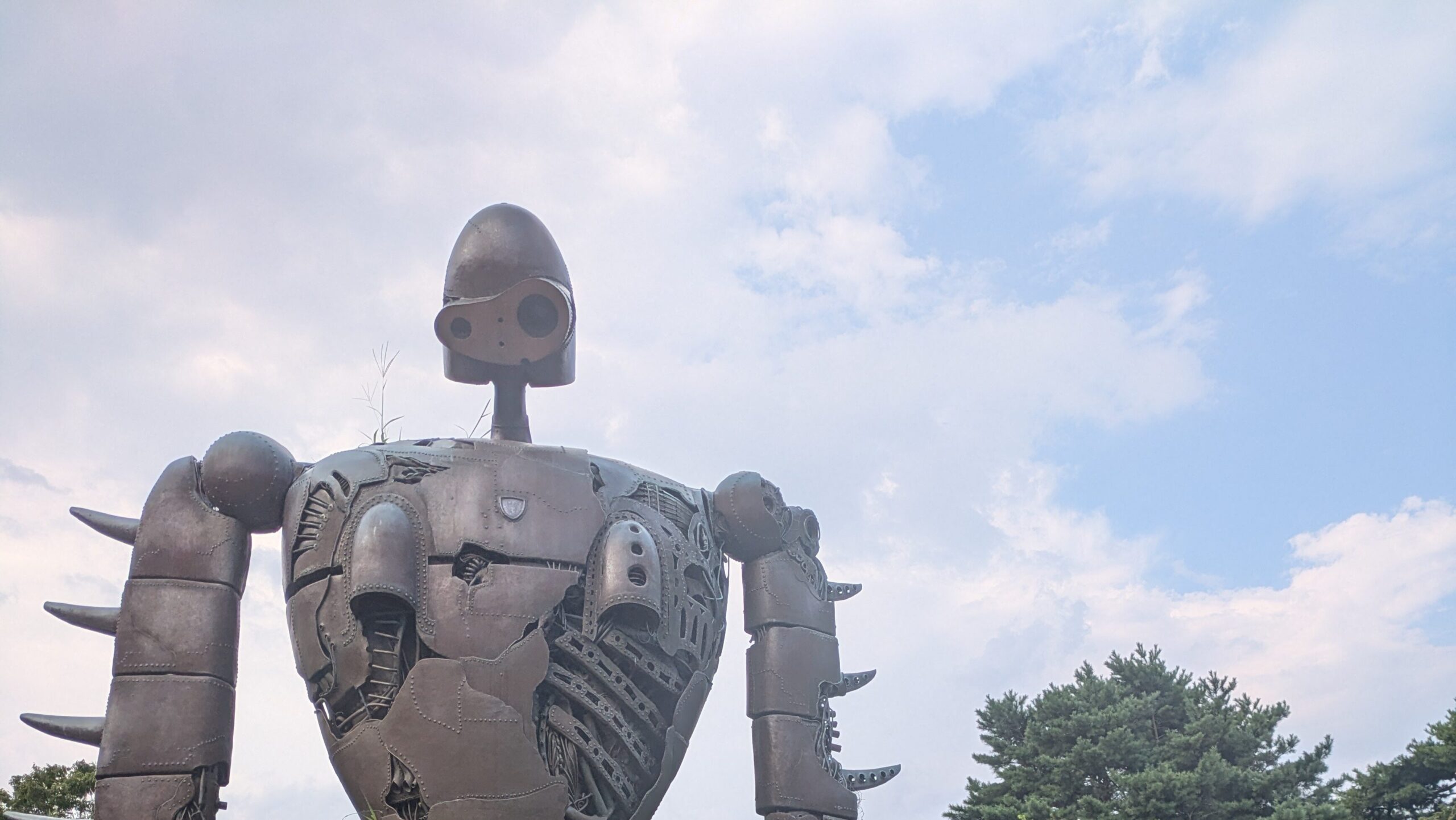
It is a place where you can feel the wind in the rooftop gardens and watch the sun move through the stained glass. But before you can meet the life-sized Robot Soldier on the roof, you have to navigate the first challenge: actually getting your tickets.
This post contains affiliate links. If you click one and make a purchase, I may receive a small commission at no extra cost to you. This helps keep the magic of this blog alive—thank you for your support!
How to Book Ghibli Museum Tickets in 2026
Booking a visit is notoriously difficult, but it really comes down to being on the right site at the exact right time. Even if you do everything perfectly, the reality is that you’ll likely be in a digital queue with thousands of other people.
When to Book
Tickets for the following month go on sale on the 10th of every month at 10:00 AM (JST).
- Example: If you want to visit in July, you need to be at your computer on June 10th.
- The 2026 Change: Have your passport details ready before 10:00 AM. The system now uses identity verification to stop resellers, so the name on your ticket must match your ID at the gate.
Where to Book
I always recommend booking directly through the official Ghibli Museum international portal (Lawson Ticket) to ensure your details are registered correctly. You can find the official site here.
Tips for a Better Chance
- Be Flexible: If you are dead-set on a specific Saturday morning, you will probably be disappointed. If you can be flexible by even a day or two, your chances of success increase drastically.
- Join the Waiting Room Early: Access the site at least 15 minutes before sales start. You’ll be placed in a queue—whatever you do, don’t refresh the page.
- Aim for Weekdays: Weekends usually sell out in minutes. If your itinerary allows, aim for a Tuesday or Wednesday when tickets tend to linger a little longer.
- Try the Afternoon Slot: While everyone fights for the 10:00 AM entry, the 2:00 PM slot is often easier to grab and the light hitting the building is beautiful at that time.
What to do if Ghibli Museum tickets are sold out
If you missed out on the official site and your trip dates aren’t flexible, there is one last resort. A few authorized travel partners, such as Klook, offer guided day tours that include a guaranteed Ghibli Museum ticket.
The Reality: These tours are much more expensive than a standard $10 ticket. This is because you are paying for a full-day itinerary, a guide, and transportation. I always suggest trying the official site first, but if the museum is a “must-see” for your trip, this is a reliable way to make sure you don’t miss out.
What a typical “last resort” tour includes:
- A Guaranteed Ticket: You skip the stress of the 10th-of-the-month booking window.
- Edo-Tokyo Open Air Architectural Museum: A visit to the park and historic buildings that inspired many Ghibli backgrounds.
- Transportation: Usually a round-trip bus from a major hub like Shinjuku.
- Lunch: Typically a standard Japanese set menu (vegetarian options are usually available).
- A Small Gift: Some tours include a museum-exclusive souvenir, though these can change.
[Check Ghibli Museum Tour Availability on Klook (affiliate link) →]
Walking the Windy Path from Mitaka Station
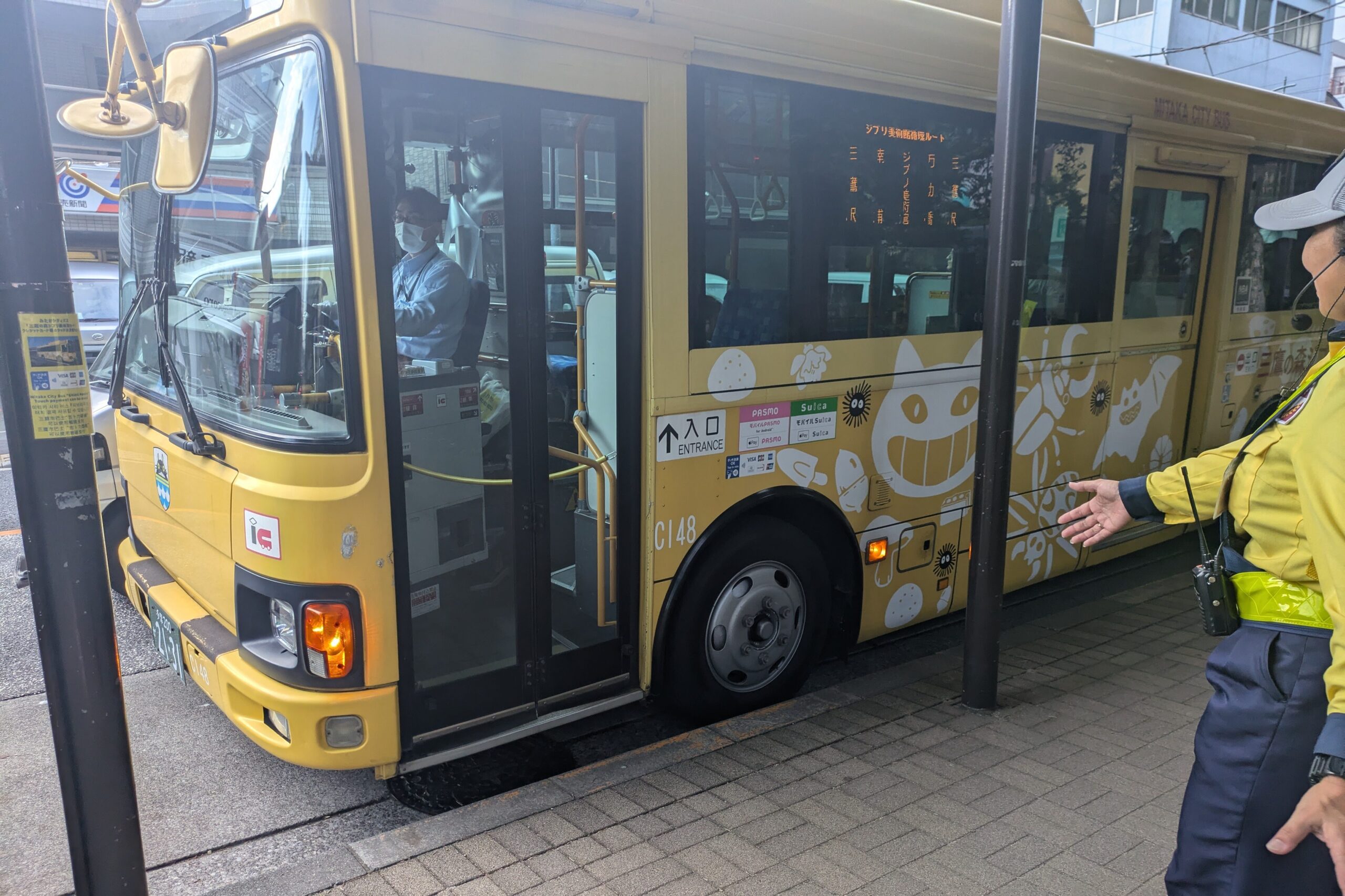
There is a yellow Ghibli shuttle bus that runs from Mitaka Station, but if you have the time, I highly recommend walking the Windy Path (Kaze no Sanpo-michi) instead. It’s a 15-minute walk along the Tamagawa-josui canal and is a much better way to ease into the experience.
What to look for on your way:
- Totoro Signposts: Look out for the small signposts featuring Totoro. They act as markers, letting you know exactly how many meters are left until you reach the museum.
- Mitaka Manhole Covers: In typical Japanese fashion, the detail starts at your feet. Keep an eye out for the custom, colorful manhole covers—they are a favorite for photographers and a great example of the local attention to detail.
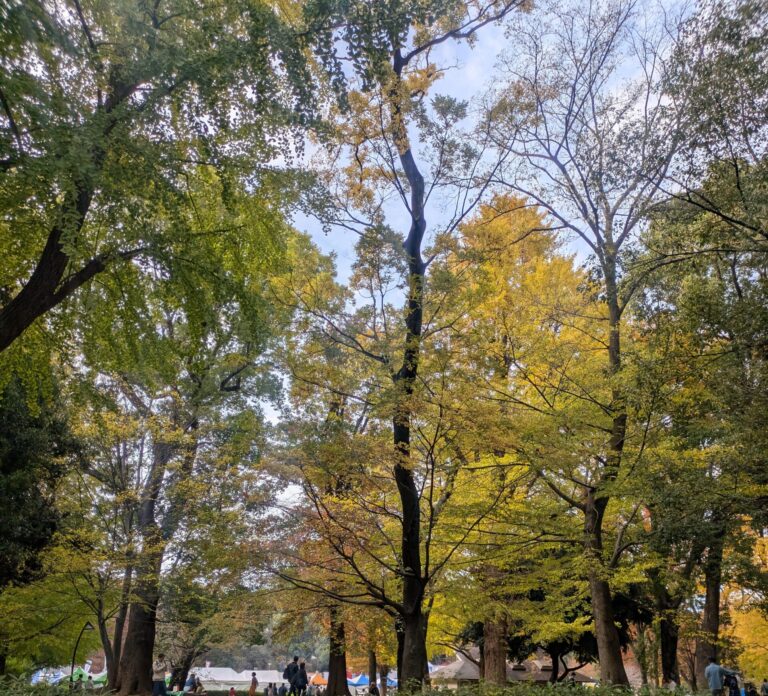
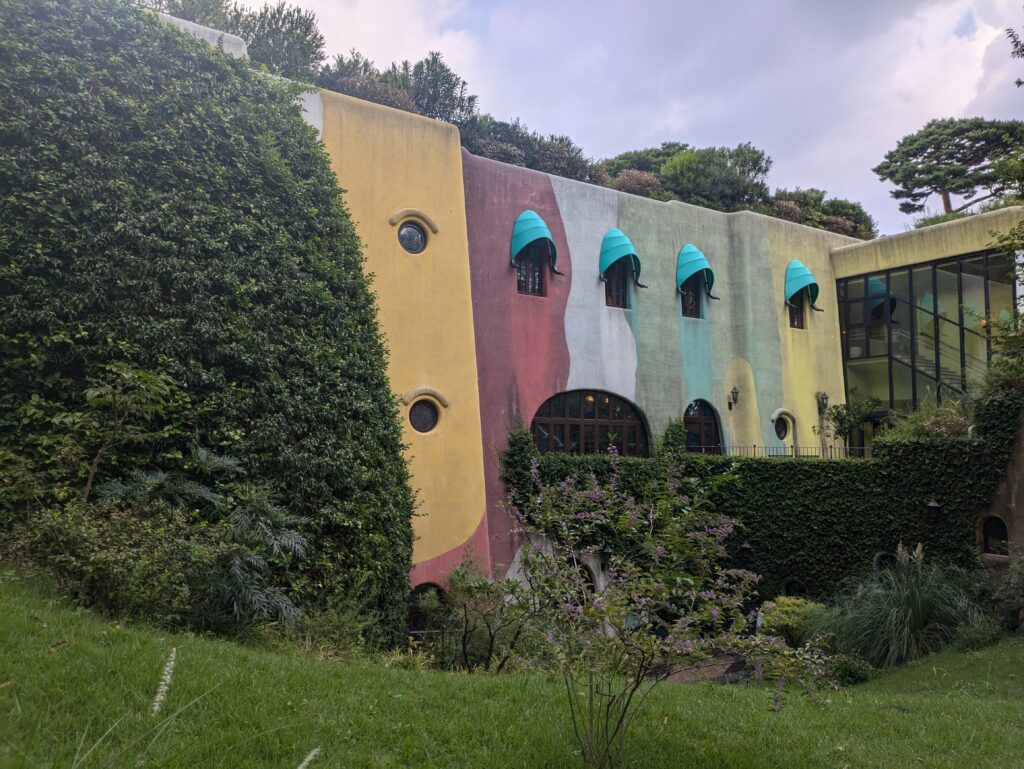
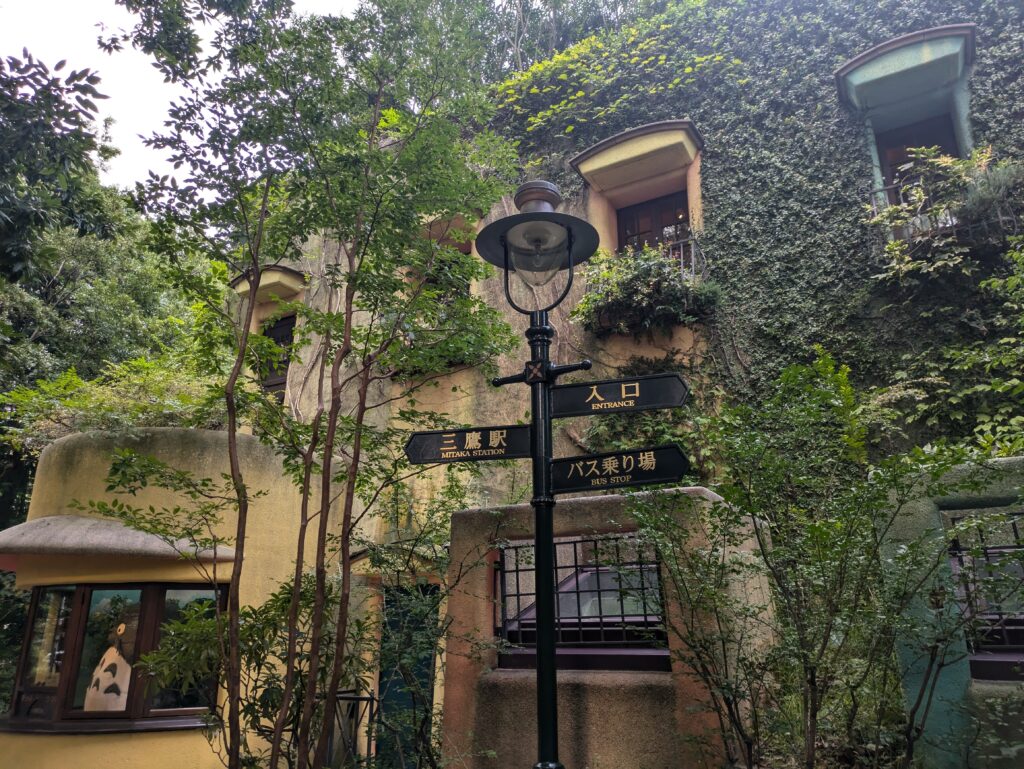
- Inokashira Park: As you leave the city noise behind, the path enters the edge of Inokashira Park. The museum is built into the greenery, so you won’t actually see the ivy-covered walls until you are right in front of them.
What to look for inside the museum
Once you trade your paper voucher for a genuine 35mm film strip—your official ticket to the Saturn Theater—the museum is yours to explore. Because you aren’t viewing the world through a camera screen, you can finally focus on the tiny, whimsical details that are so easy to miss. Before rushing into the main exhibits, take a slow moment in the Central Hall. If you look up into the glass dome, you’ll catch a giant yellow whale swimming across the sky, and if you study the overhead ceiling frescoes closely, you can spot Kiki and Nausicaä hidden right among the painted vines.
Every corner of this building invites quiet observation rather than frantic sight-seeking. For families traveling with kids, children under twelve can climb directly inside a giant, plush Catbus on the upper floors. But even if you are visiting as an adult, there are plenty of secret spots to stumble into—like the narrow, easily overlooked dirt path tucked quietly behind the massive rooftop Robot Soldier, which leads you to the hidden stone emblem from Laputa away from the main photo crowds.
The Saturn Theater (Exclusive Short Films)
Located on the basement level, this beautiful cinema is an absolute must-visit. The ceiling and walls are covered in colorful painted flowers, and the moment the film ends, the mechanical window shutters slide open to let the real sunlight flood back into the room.
- How it works: Your standard museum entry ticket includes one admission voucher disguised as a real strip of 35mm film. You hand this to the staff at the theater door, and they will stamp it to let you in.
- The Saturn Theater Schedule: The museum doesn’t play a random mix of movies all day. Instead, they run one specific exclusive Ghibli short film for the entire month on a continuous loop every 15 to 30 minutes.
- The 2026 Rotation: The shorts are totally exclusive to the museum ecosystem and rotate regularly. Depending on which month you score tickets, you’ll get to see rare masterpieces like The Day I Bought a Star (featuring a boy growing a miniature planet), Mon Mon the Water Spider, or Boro the Caterpillar.
- Language Barrier: Don’t worry if you don’t speak Japanese! These films are roughly 15 minutes long and are designed to be purely visual, whimsical, and incredibly easy to follow for both adults and young kids.
Tip: You can check exactly which short film is playing during your travel dates on the official Ghibli Museum screening calendar.
Mamma Aiuto Gift Shop
The shop is the only place to find “Museum Exclusive” items, but it gets very crowded.
- The Strategy: Avoid the shop in the final 30 minutes before closing when it becomes a scramble. Try popping in when a film screening has just started; the floor is usually much quieter then.
- What to look for: The hand-painted animation cels and postcards are lightweight and easy to pack.
- Take a breath: If the shop feels overwhelming, head out to the patio for a few minutes. The experience is better when you aren’t rushing.
The Straw Hat Café
The café serves hearty food that looks like it belongs in the films.
- The Wait: Lines move steadily. If you avoid the peak lunch hour (12:00 PM – 1:30 PM), the wait is usually manageable.
- The Menu: Expect simple items like meatball soup or katsu sandwiches. Look for hidden characters on the plates and hand-drawn details on the menus.
- Dietary Notes: Vegan and gluten-free options are very limited here. If you have strict requirements, I’d suggest just grabbing a drink for the atmosphere and eating closer to Mitaka Station.
Ghibli-themed alternatives in and around Tokyo
If the booking queue didn’t go your way, don’t feel like your trip is incomplete. There are plenty of ways to find that same atmosphere across Tokyo without a museum ticket.
Shiro-Hige’s Cream Puff Factory
Located in a quiet corner of Setagaya-Daita, this café is owned by Hayao Miyazaki’s sister-in-law. It is the only place where you can find Totoro-shaped cream puffs.
- The Atmosphere: The space is filled with signed sketches and forest-themed decorations.
- What to Order: The puffs come with different “hats” to show the flavor—custard and chocolate are always available, but look for seasonal options like chestnut or peach.
- Getting There: It’s a short walk from Setagaya-Daita Station. If you want to sit in the upstairs café, try to arrive right at opening as it fills up quickly.
The Ni-Tele Giant Clock (Shiodome)
In the Shiodome district, you can find a massive copper clock designed by Miyazaki that looks like it belongs in Howl’s Moving Castle.
- The Show: Several times a day, the clock “wakes up” for about three minutes. Over 30 mechanical figures move to music while steam exhales from the pipes. It’s entirely free to watch.
Donguri Republic (Acorn Republic)
If you missed the museum shop, these are the official boutiques. You can find them at Tokyo Skytree (Solamachi) or under Tokyo Station at Character Street.
- The Experience: These stores are highly detailed, often featuring a life-sized snoring Totoro at the entrance. They carry most of the items you’ll find in the museum, minus the museum-exclusives.
Ghibli Park (Nagoya)
If you have room in your schedule to leave Tokyo, Ghibli Park in Nagoya is a much larger, open-air tribute to the films.
- The Difference: While the Mitaka museum focuses on the process of animation, the park focuses on the worlds themselves, like the Valley of Witches.
- The Logistics: It’s about three hours from Tokyo via Shinkansen. It’s possible as a day trip, but expect a very early start and a late return. Tickets are still in high demand, but because the site is larger, it can be easier to navigate if you plan ahead.
Izu Teddy Bear Museum (The Adult-Friendly Catbus)
Located down on the scenic Izu Peninsula, the second floor of this charming museum plays host to a long-running, extensive Totoro plush exhibition.
- The Big Draw: Unlike the Mitaka museum where the plush bus is strictly for kids, adults are actively encouraged to climb entirely inside this life-sized Catbus for photos.
- The Experience: You can explore massive plush displays, or book an advance workshop slot to stuff, sew, and customize your very own unique Totoro plushie to take home.
- Getting There: An easy two hour train ride from Tokyo Station to Izu-Kogen Station (you can take a direct Limited Express Odoriko train or a quick Shinkansen transfer at Atami). From the station, the museum is a lovely 9-minute walk. It makes a flawless stop if you are already planning a slow weekend escape to explore the seaside charm of Ito or spend a day wandering through Izu Kogen.
Final Thoughts: Reading the Magic
Whether you secure a ticket or find your magic in a Totoro-shaped cream puff elsewhere, I hope you take the museum’s motto to heart: Let’s get lost together. Put the phone away, follow the Windy Path, and enjoy the beauty of the journey. After all, the best footsteps are the ones that lead us somewhere we didn’t expect to go.