Kamakura Day Trip: Finding the Quiet Side of the Shogun’s Coast
There is a specific frequency to Kamakura—a hum that sits somewhere between the salt-heavy air of the Pacific and the deep, shaded silence of the hills. It is a place where you step around a corner and find a stone torii gate that has stood for centuries, framing a view of the ocean so perfect it feels scripted. Japan is thoughtful and intentional in everything it does, and in Kamakura, that intentionality creates a world that feels both beautifully curated and deeply peaceful. Standing at the top of Hase-dera, looking out over the curve of Sagami Bay, you can feel that balance. The town below seems to follow the rhythm of the tides, tucked into the greenery of the surrounding mountains. It’s the kind of place that invites you to put the map away and just follow the narrow lanes, knowing that every turn will likely lead to another hidden shrine or a sudden glimpse of the sea.
Leaving the Neon Behind: The Journey from Tokyo
To reach this coastal escape from Tokyo is a surprisingly simple transition. In just under an hour, the skyscrapers of Shinjuku give way to low-slung houses and the first glimpses of forested hills.
The Direct Path
If you’re looking for the most straightforward route, the JR Yokosuka Line from Tokyo or Shimbashi stations is a direct, 55-minute shot into the heart of Kamakura. It’s efficient and gets you to the coast before the morning mist has fully lifted from the hills.
The Scenic Alternative
For those who prefer a slower approach, the Odakyu Line via Shinjuku offers the “Enoshima-Kamakura Free Pass.” You’ll swap trains at Fujisawa for the Enoden Line, a charming, vintage electric railway that rattles right past the backyards of local houses and offers stunning flashes of the ocean as you roll toward Hase.
The Enoden: The Moving Frame
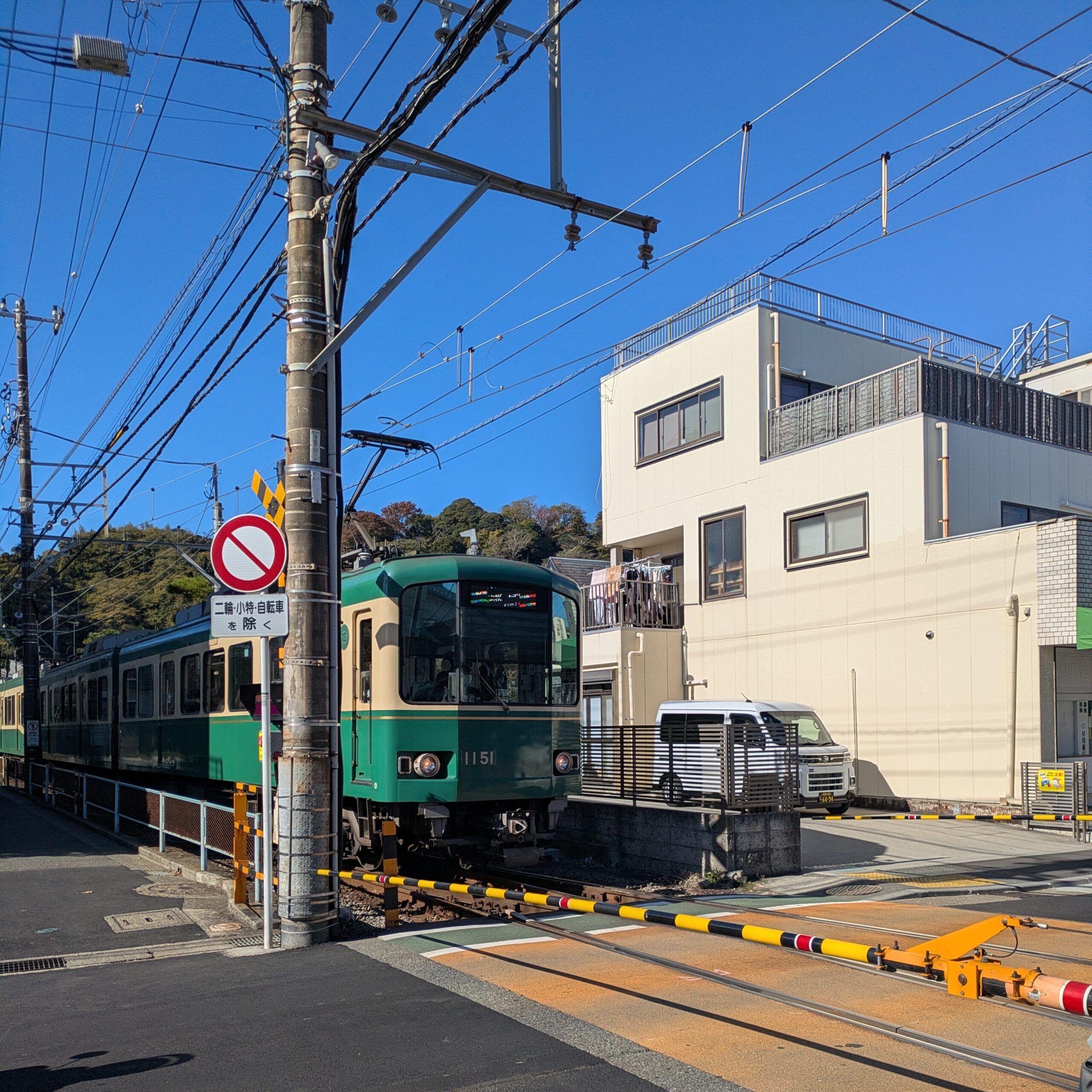
For many, the highlight of a Kamakura day trip is the Enoden line. This little green-and-yellow train is the star of the coast. One minute you are rattling through backyards so close you can see the laundry on the balconies; the next, the houses vanish and the window becomes a moving frame for the shimmering Pacific.
Pro Tip: Even if you take the direct JR train to Kamakura Station, you can and should still ride the Enoden! Just head to the West Exit of Kamakura Station to find the Enoden platforms. You can hop on here and take it a few stops down to the Hase neighborhood after you’ve explored the town center.
The Coastal Shortcut: Starting at Hase Station
We traded the busy main station for the salt-air rhythm of the Hase neighborhood. There’s something super charming about this open-air stop; it feels like the true gateway to the coast. After a quick caffeine stop at the Starbucks right next to the tracks, we were ready to leave the crowds behind and head toward the Great Buddha.
The Iron Giant of Kotoku-in
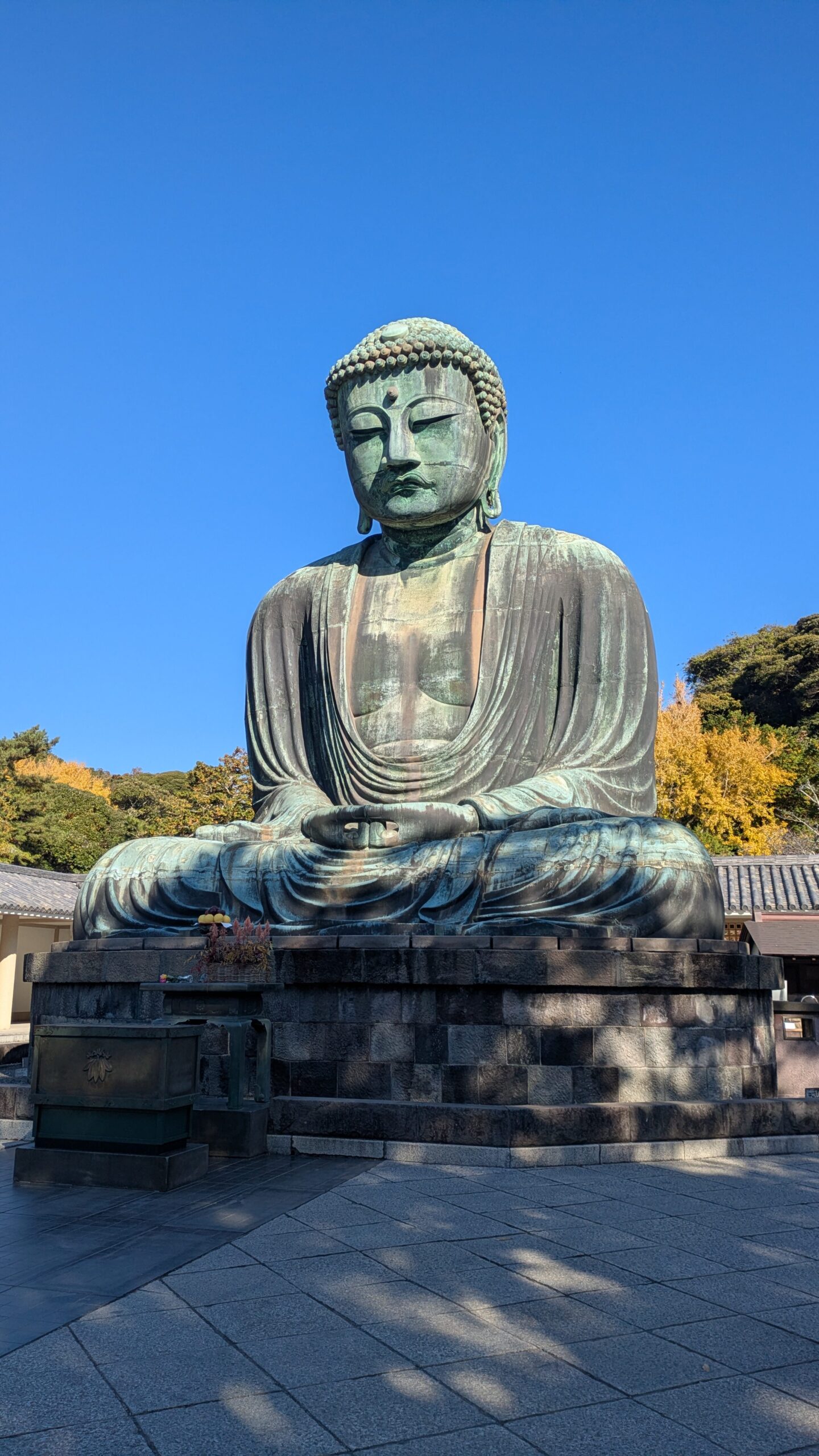
From the station, it’s a steady, gentle climb up the main road to Kotoku-in, home to the Great Buddha. If you walk straight there from the station, it’s a 6-minute walk. Sitting under the open sky, this massive bronze statue feels like a part of the landscape. It hasn’t always been open to the elements, though; the Great Buddha has survived centuries of typhoons, earthquakes, and even a 15th-century tsunami that swept its original temple building away, leaving the statue standing alone against the Pacific.
My son loved the ‘secret cave’ part of the statue—it’s hollow, and for a tiny fee, you can actually climb inside. There’s something uniquely cool about standing in the dark, cool belly of a 700-year-old giant while the sun blazes outside. Just make sure you keep some 100-yen coins handy for temple entries and the ‘secret’ climb inside the Buddha; Cash is definitely king in Kamakura.
Hasedera: Where the Mountain Meets the Sea
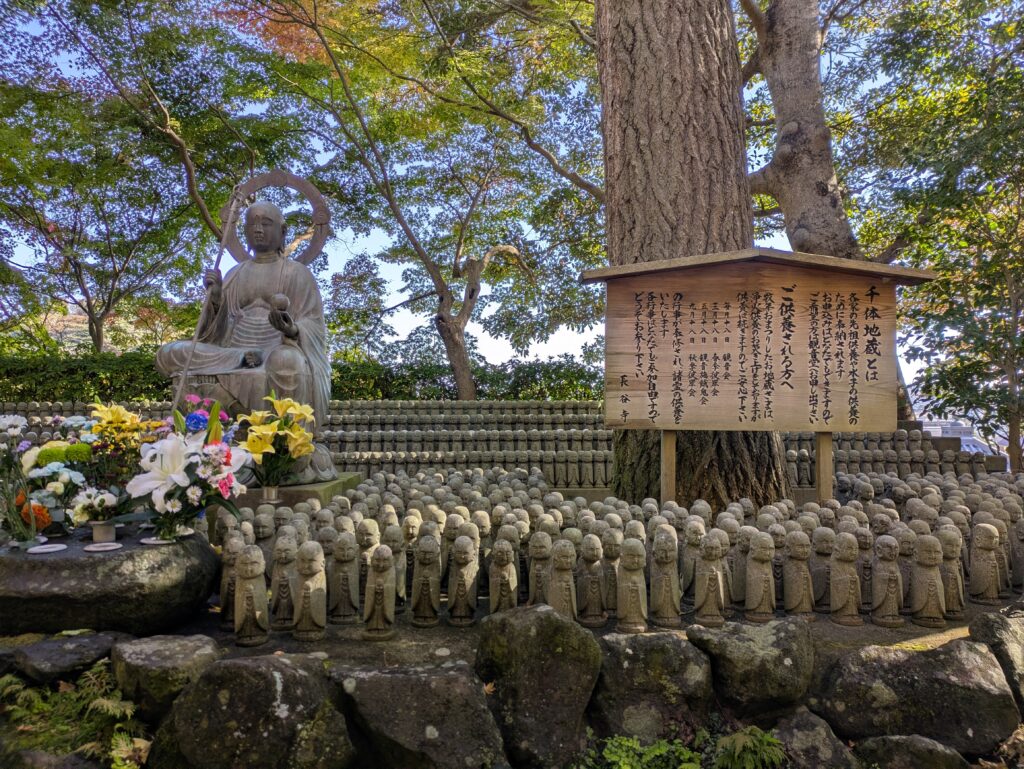
A short walk back down the road is Hasedera, a temple complex terraced into the hillside. The climb up is half the magic; you wind past koi ponds and thousands of tiny, moss-covered Jizo statues tucked into the ferns.
Reaching the main observation deck is a moment of total intentionality. From here, the mountain perfectly frames the crescent curve of the bay below. It’s the kind of view that makes you stop and realize how carefully Japan marries its sacred spaces to the natural landscape. Before heading back down, duck into the Benten-kutsu cave—a low, candle-lit tunnel carved directly into the rock that feels like a hidden world away from the coastal sun.
The Path to the Pacific: Yuigahama Beach
From the hills of Hasedera, the air begins to change—it gets saltier, cooler, and carries the faint sound of the tide. Instead of following the main road back to the station, we let the quiet residential lanes lead us toward the water.
Japan has a way of rewarding the curious. Tucked away in these backstreets, we stumbled upon a small hillside cemetery. Standing at the entrance, a weathered stone Torii gate framed the Pacific Ocean perfectly. It wasn’t just a place of rest; it was a vantage point. It felt deeply intentional—a reminder that in Kamakura, even the spaces for the dead are given a world-class view of the horizon.
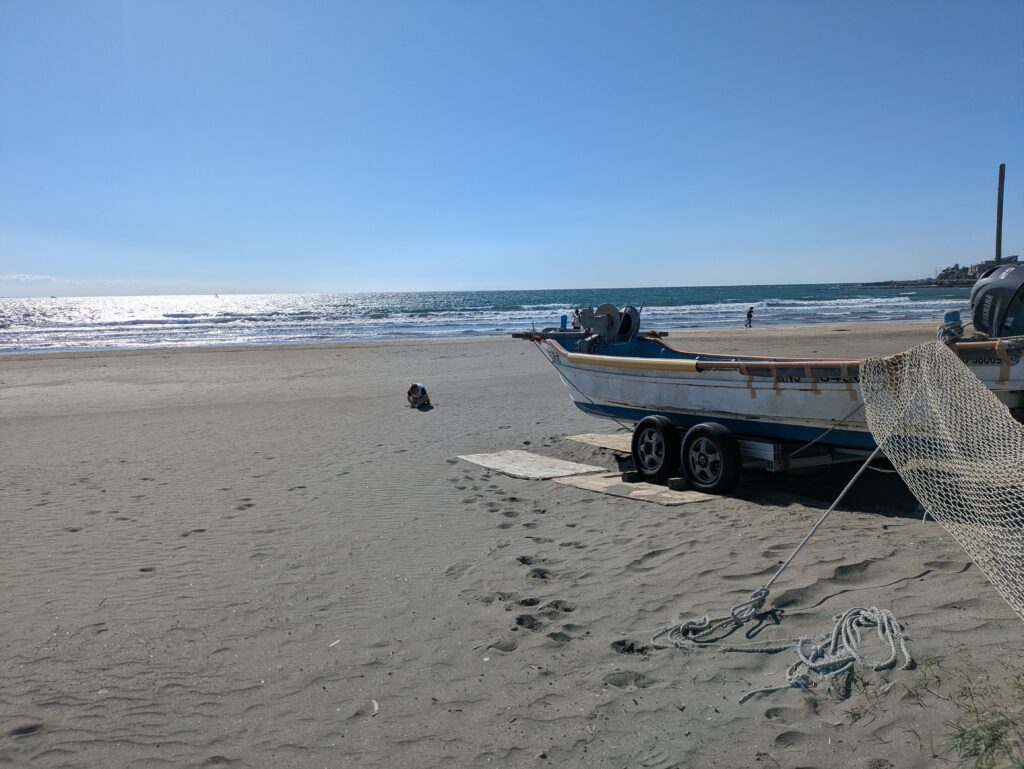
A few more turns and the pavement gave way to the wide, dark sands of Yuigahama Beach. This isn’t a manicured resort beach; it’s a working coastline. Traditional wooden fishing boats were pulled up onto the sand, their paint worn by salt and sun. Watching the local fishermen tend to their nets while my son hunted for sea glass was the perfect reset. It felt like a scene from a Ghibli film come to life—quiet, rhythmic, and the perfect end to our coastal walk.
Designing Your Day: The Add-Ons
If you have the energy to turn your half-day into a full-day adventure, Kamakura has two very different faces to show you:
- The Shogun’s Path (The Military Heart): Start or end your day at the main Kamakura Station. From here, walk the Dankazura—a beautiful, raised stone pathway lined with cherry trees—that leads directly to the massive Tsurugaoka Hachimangu Shrine. This isn’t a quiet seaside temple; it’s the grand, red-lacquered heart of the city, built by the first Shogun to show his power. It’s a striking contrast to the humble, salt-worn vibes of the coast.
- Enoshima Sunset (The Island Escape): Ride the Enoden west to the very end of the line. From there, it’s a short walk across the bridge to Enoshima Island. As the light turns golden, the island’s lighthouse (the Sea Candle) begins to glow. If you’re lucky and the sky is clear, look past the crashing waves—the purple silhouette of Mount Fuji often appears on the horizon like a ghost. It’s the ultimate “Japanese postcard” ending to the day.
Practical Traces: Planning Your Day
- Best Time to Visit: Arrive by 9:30 AM to see the Great Buddha before the midday crowds.
- Transport Choice: Use the Enoshima-Kamakura “Freepass” (¥1,640) from Shinjuku for the full loop, or just your Suica/Pasmo for a simple half-day trip.
- Cash is King: Keep 100-yen coins ready for temple entries and the “secret” climb inside the Buddha.
- The View Tip: On the Enoden heading west (toward Enoshima), sit on the left side for the best views of the Pacific.
Small Footsteps: Notes for Parents
- The Hase Shortcut: Starting in the neighborhood around Hase Station keeps the “magic-to-walking” ratio high for kids.
- The Gentle Climb: It is a bit of an incline from the station to the Buddha. It’s manageable, but be ready for a slow stroll if it’s hot.
- The Beach Reset: When the temples get “too quiet,” head to the wooden boats. It’s a natural playground for burning off energy.
- Stroller Note: Hasedera has many stairs. Park the stroller at the entrance and use a carrier for the top view.
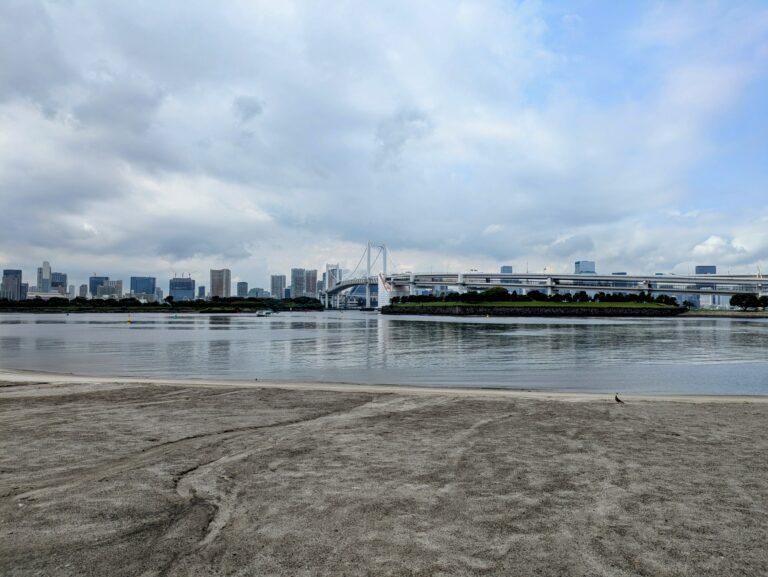
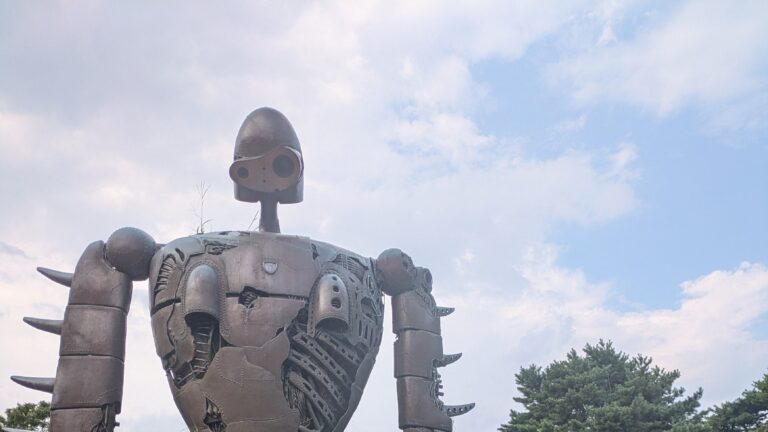
Looking for more Tokyo day trips? Check out our guide to the Ghibli Museum or our afternoon in Odaiba for more family-friendly traces.
A Final Note on Kamakura
As we headed back toward the city, I left feeling like the best part of Kamakura wasn’t necessarily the “big” sights—it was the way everything just seemed to fit together. From the giant bronze Buddha in the hills to the worn-out fishing boats on the sand, there’s an intentionality to the landscape that you don’t find in the middle of Tokyo.
It’s a place that rewards you for stepping off the main path. If you take the Enoden, get off at the smaller stations, and follow the side streets toward the water, you’ll find a version of Japan that feels both ancient and incredibly lived in. It was the perfect day for us, and easily one of the most memorable times of our trip.