Yoshinogari: A Walk Through Ancient Japan
When planning our self-drive route through Kyushu, I wanted to find the magic in the gaps between major cities by truly going ‘off the beaten path.’ While browsing Google Maps for our route from Fukuoka to Kumamoto, a small icon caught my eye: Yoshinogari Historical Park.
History has always been a shared interest for my husband and i, but this was a part of the Japanese story we hadn’t yet explored or even heard of. Everyone is used to the grand tales of Samurai and Shoguns, but Yoshinogari reaches back much further— 2000 years back to the Yayoi period. It is a glimpse into a more primitive, foundational time that you don’t necessarily expect to find just off a modern highway.
Interestingly, this land was nearly lost. In the 1980s, these hills were meant to become an industrial area. It was only then when the first relics were unearthed that the project was stopped, eventually revealing one of Japan’s largest moat-encircled villages. There’s a bit of irony in that—a place meant for factories instead became a 73-hectare sanctuary dedicated to ‘listening to the Yayoi voice’.
Arriving at Yoshinogari: Stepping Back 2,000 Years
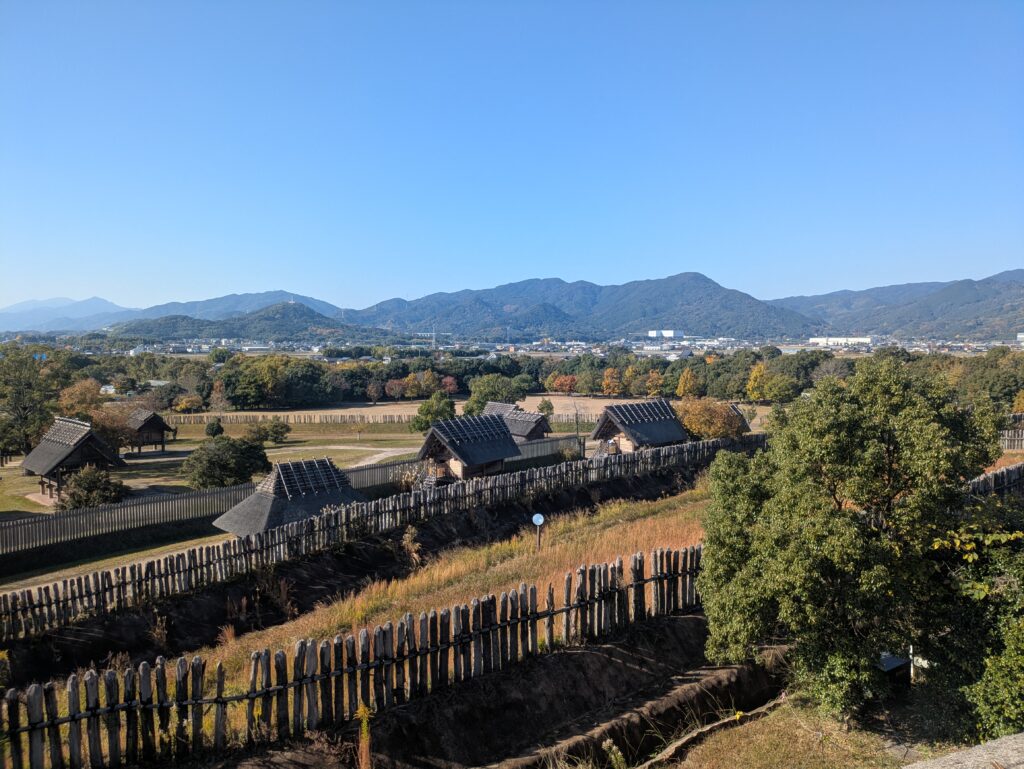
Arriving at the park, the first thing that hits you is the sheer scale. After parking in the massive, quiet lot, we wandered toward an entrance that felt appropriately as vast. Everything here just feels wide open and peaceful.
At the counter, we were met with the kind of hospitality that defines Japan. The staff were keen to chat about where we had come from. We quickly realized we were the only Westerners in the park; it didn’t seem like a usual tourist spot, but rather a significant local treasure. It was lunchtime as we arrived, and after looking at the huge map of the grounds, we knew we’d need to eat before starting our trek. We headed to the onsite restaurant, navigated the ticket machine to order a simple lunch, and refueled before stepping back 2,000 years.
Crossing the Moat
We started our trek by crossing the “Floating Bridge of Heaven,” a long wooden span that serves as the entrance to the inner sanctuary of the park.
It was here, on the bridge, that we first met Fuji.
He was one of the many volunteers who dedicate their time to educating guests about the Yayoi period. Even in his official volunteer uniform, i sensed something calm and peaceful about him. He was incredibly knowledgeable and passionate, mapping out the best routes for us and advising us on the “must-see” sections so we didn’t miss the park’s “soul.”
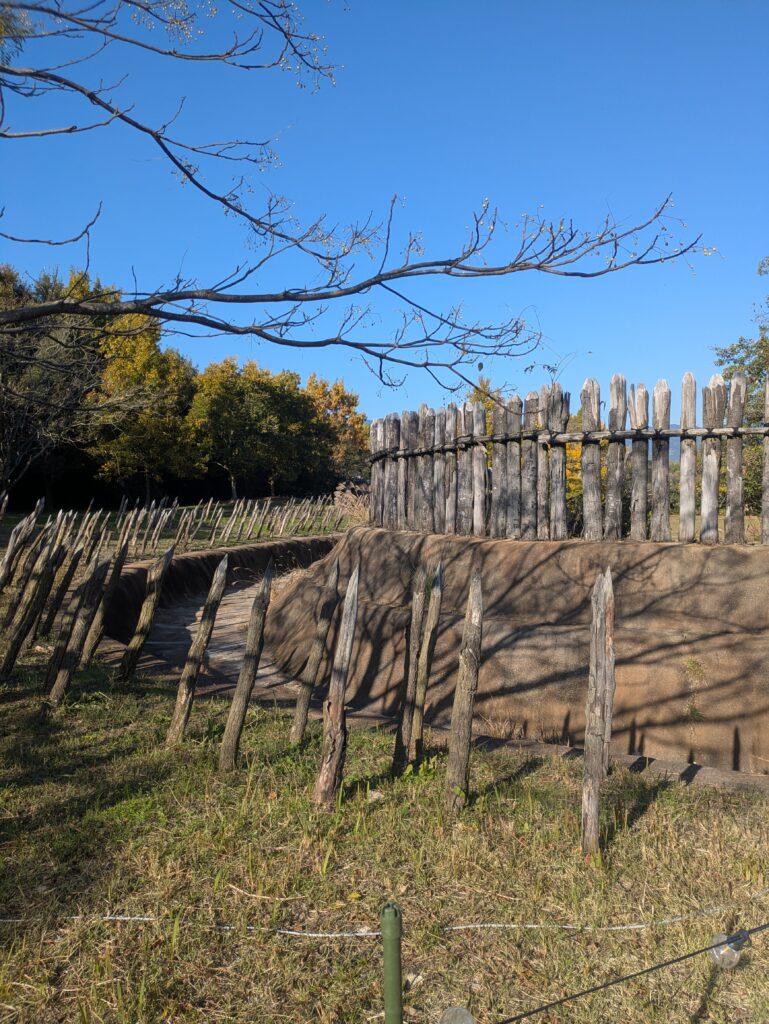
Once we crossed the bridge and left Fuji to his next guests, you can really see how defensive the whole place was. We moved past deep moats and jagged wooden spikes designed to protect this ancient community.
This layout isn’t just for show; The design so closely resembles descriptions of ‘Yamatai’—a legendary ancient country mentioned in early Chinese chronicles—that it has captured the imagination of historians across Japan. Standing there, looking at the defenses, you can see why.
Inside the Exhibition: The Layers of the Past
We moved through the exhibition buildings, where the reality of history is on display. Here, you see the actual artifacts uncovered from the earth: iron tools, delicate beads, and the massive clay jars once used for burials. Seeing these items makes the Yayoi people feel less like a textbook entry and more like a living community.
We then wandered through the South Inner Enclosure and climbed the watchtowers, the whole place felt really peaceful. It wasn’t completely silent, though—down on the ground, volunteers were busy setting up thousands of paper lanterns for a light show that night. It was actually really cool to see; it felt like everyone there had a lot of respect for the history they were preserving.
A Gift from the Watchtower
At the top of one of the highest watchtowers, looking out over the Saga plains, we encountered Fuji for a second time.
High above the thatched roofs, he reached into his pocket and handed me a gift—a postcard of the park. It was in our quiet, broken-English conversation that he mentioned he lived at a nearby temple.
Realizing the Fuji was likely a monk changed the whole feeling of the afternoon. He wasn’t just a guide; he was a bridge between the ancient spirits of the park and the modern world outside the gates. I may never know his full story, but in that exchange of a postcard and a bow, he became the face of Yoshinogari for me. Someone I’ll remember forever.
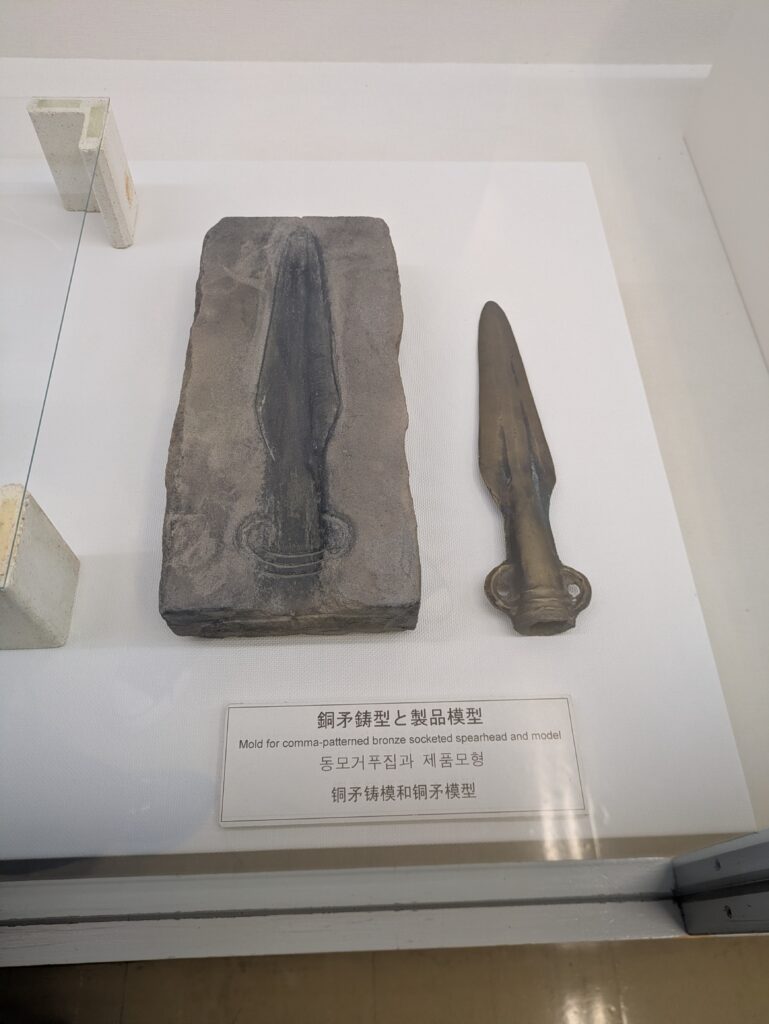
The precision of the past—bronze weapons
and the original molds used to cast them.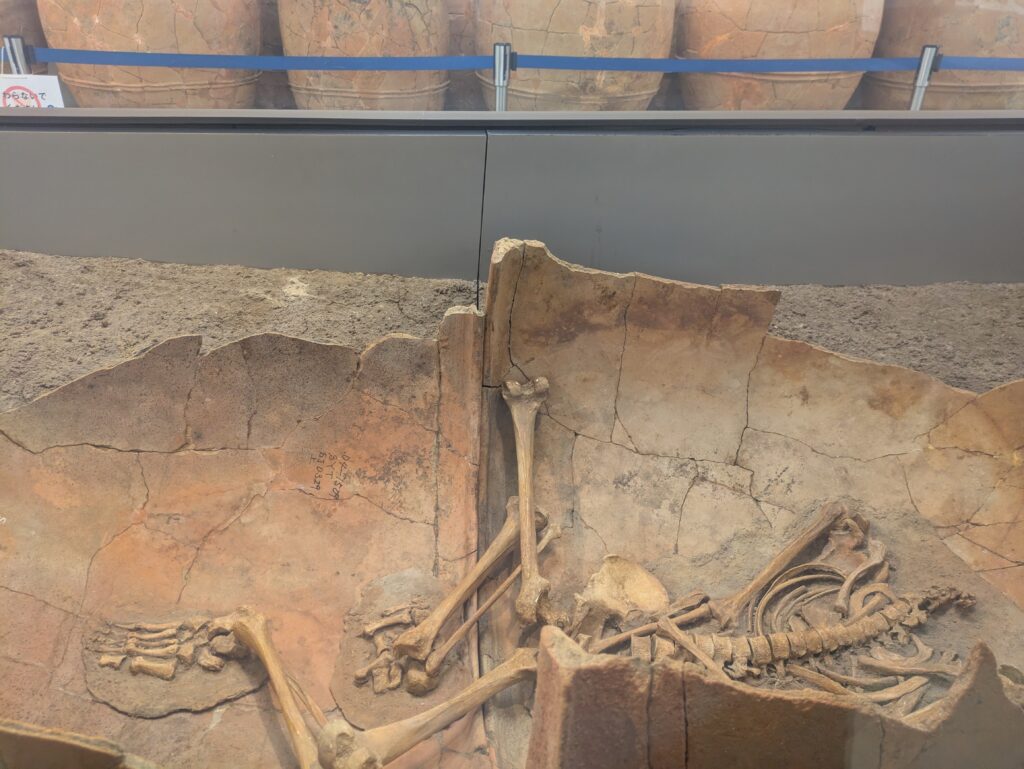
A powerful look at the Kamekan burial style that defined this era. 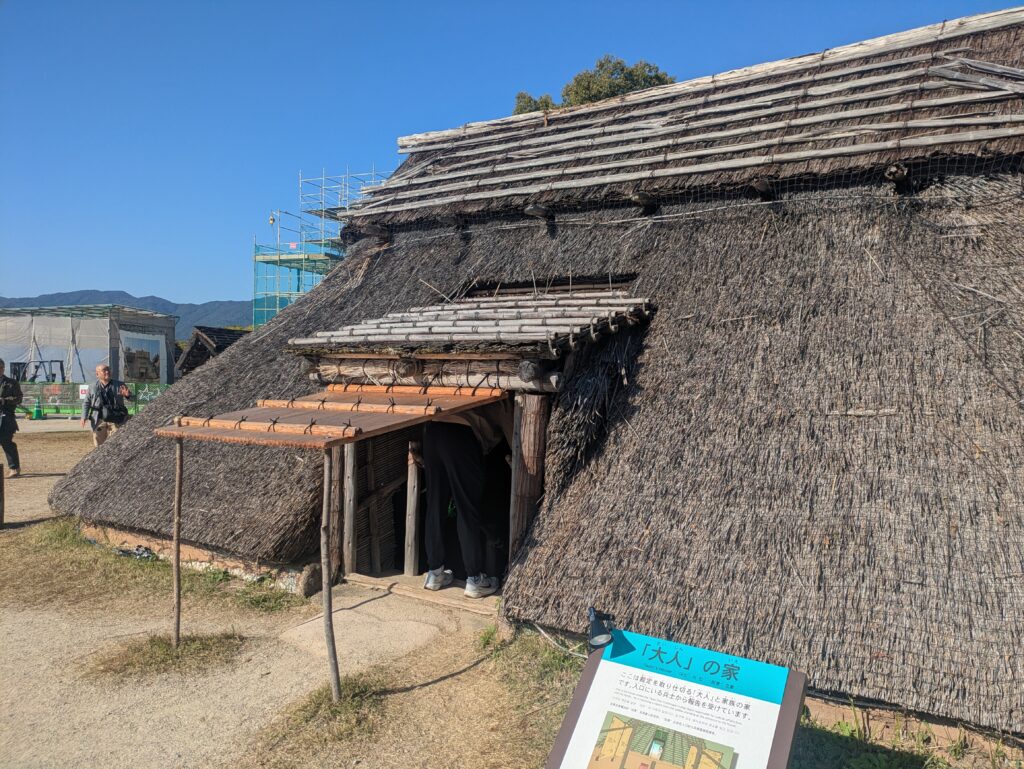
You can actually step inside the daily life of the Yayoi in this
reconstructed pit dwelling.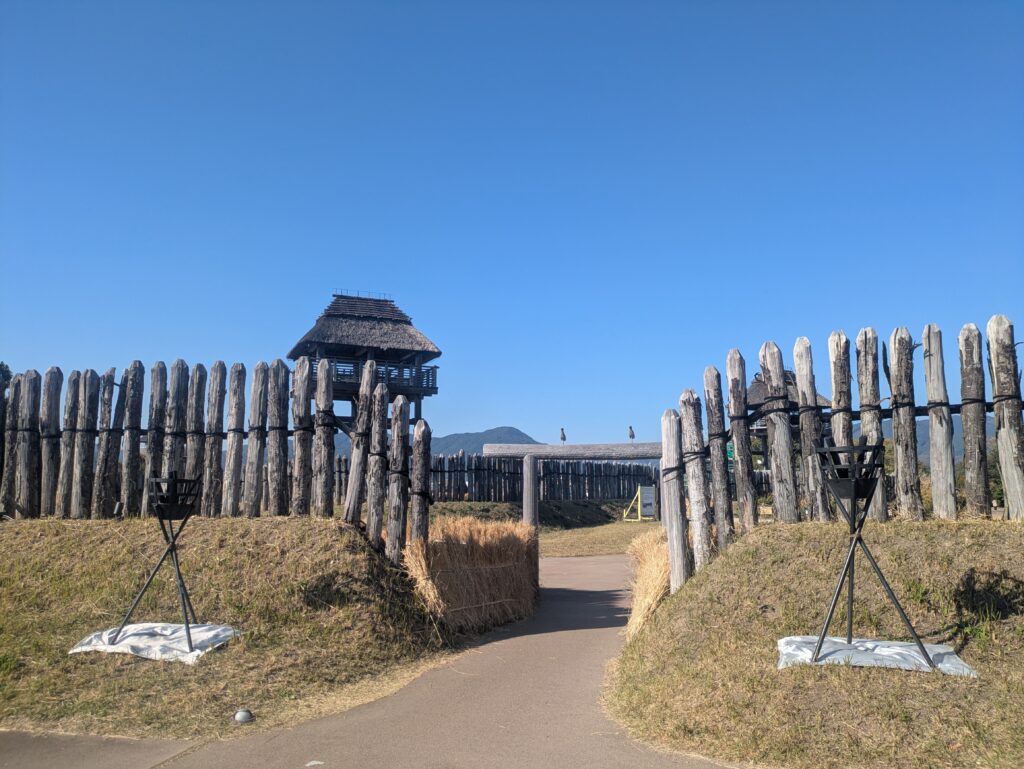
The entrance to the South Inner Enclosure, where watchtowers once
stood guard over the ruling class.
The Northern Burial Mound: A Sacred Encounter
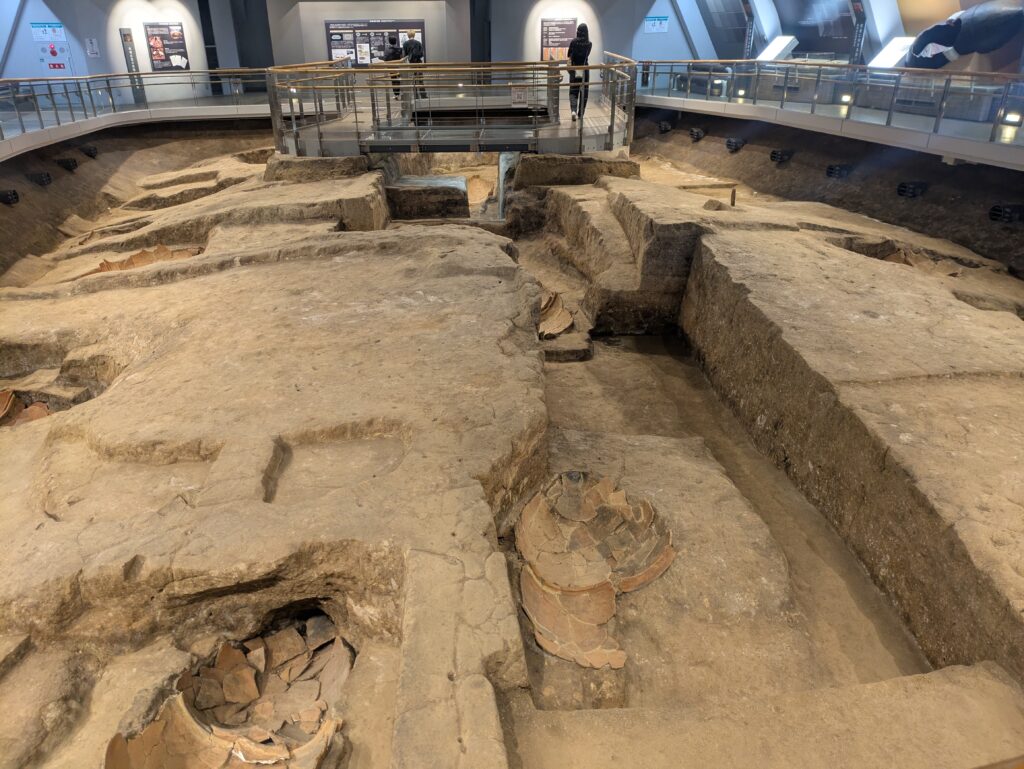
When you see that big mound of earth from a distance, it just looks like a hill. But when you walk a bit further, you realize it isn’t just a mound of dirt—it’s the actual excavation site, perfectly preserved right where they found it.
I wasn’t expecting to be able to see the site itself, but there are glass bridges that let you walk directly over the burial jars (Kamekan) still sitting in the ground. After seeing the replicas in the museum, standing over the real spot where people were laid to rest 2,000 years ago is a massive reality check. It really hits home that Yoshinogari is a place of genuine history.
The North Inner Enclosure: The Heart of the Settlement
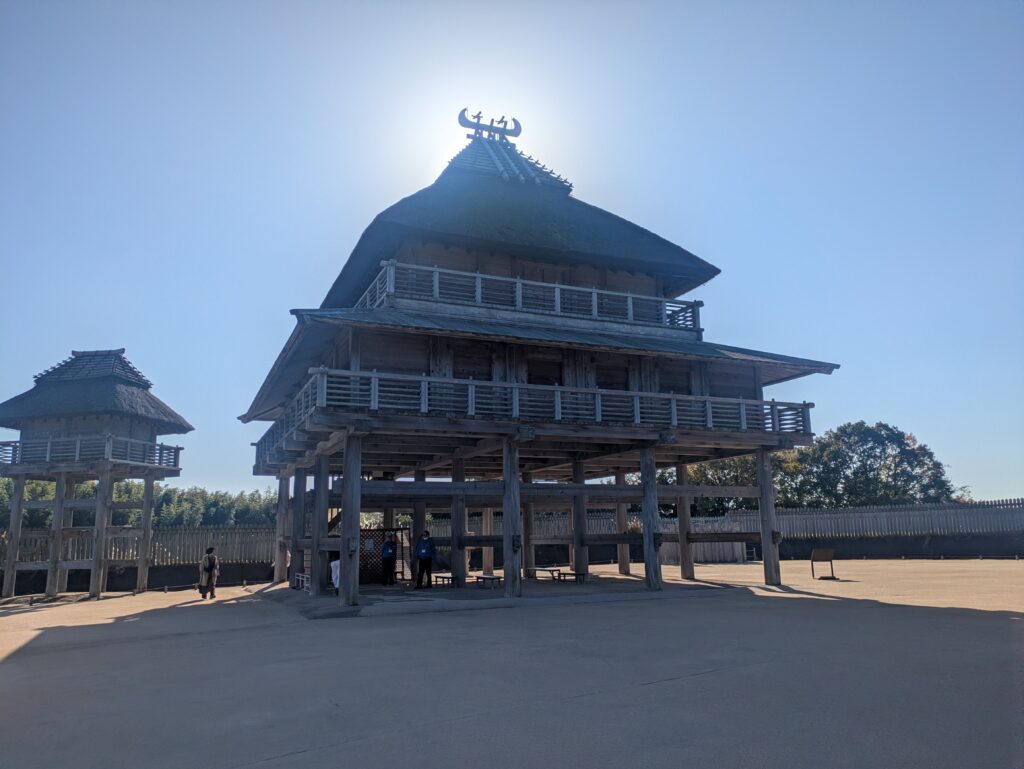
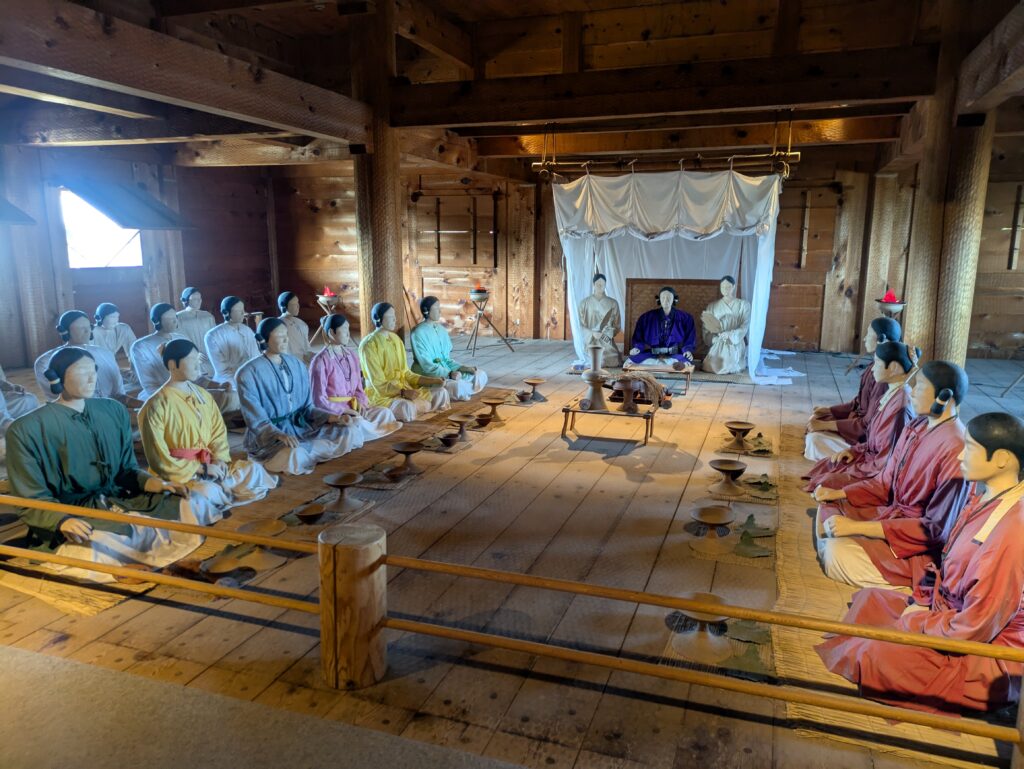
Realizing the sheer scale of the 73-hectare park, we knew we couldn’t see everything in a single afternoon. From the burial mound, we made our way to the North Inner Enclosure. This is considered the most sacred part of the park, featuring a massive, reconstructed Ceremonial Hall. It’s easy to imagine the ancient leaders gathering here for the rituals and political ceremonies that shaped early Japanese society.
Wandering Back: The South Village
Our journey back toward the entrance took us through the South Inner Enclosure and the South Village. We took a slight detour to enjoy the quiet of the Grand Field and the Lotus Pond, which added a moment of natural stillness to the day.
Before leaving, we passed the Yayoi Lifestyle Museum. This is a great spot for families or those with more time, as you can sign up for hands-on activities like bead-making or traditional fire-making. While we didn’t have time to join in, seeing the “living” side of the park made the ancient Yayoi culture feel accessible and very much alive.
Planning Your Visit: The Essentials
How to Get to Yoshinogari (Train & Car)
By Car
This is a perfect stop for a Kyushu self-drive. It’s about 60 minutes from Fukuoka Airport via the Nagasaki Highway (Higashisefuri Interchange). From there, it’s a quick 5-minute drive south on Route 385.
By Train
From JR Hakata Station, take the JR Nagasaki Line. You can take a Limited Express to Tosu and change to a local train, or catch a direct Rapid service. Get off at JR Yoshinogari Park Station.
Getting to the gates:
From the station, it’s a flat 15-20 minute walk (look for the cute mascot signs!). If you’d rather not walk, catch the “Himawari” community bus at the station exit for about 100 yen.
Admission & Parking
Adults (15+) | 460 yen |
Seniors (65+) | 200 yen |
Kids (under 15) | Free! |
There is ample parking available. Standard vehicles are 310 yen, while motorcycles are 100 yen.
Hours & Timing
Opening Hours: 9:00 am – 5:00 pm (Open until 6:00 pm from June 1st to August 31st).
Closures: The park is closed on December 31st and the third Monday and Tuesday of January.
Last Entry: Keep in mind that last entry is usually 30 minutes before closing, so don’t cut it too fine!
For the most up-to-date information on seasonal events and holiday closures, check the Official Yoshinogari Historical Park Website.
How Much Time to Spend at Yoshinogari
The Quick Look (2 hours)
Focus on the South Inner Enclosure and the Exhibition Building. It’s well worth it just to see the scale of the towers and the bridge.
The Full Trek (4+ hours)
If you want to see the burial mound and the lifestyle museum at a slower pace, give yourself most of the day.
Accessibility
Yoshinogari is impressively inclusive, designed to be enjoyed by everyone regardless of mobility:
- Mobility Support: There are electric mini-buses that depart every 30 minutes to help visitors move between the larger sections of the park.
- Rentals: Manual and electric wheelchairs, as well as baby strollers, are available for rent at the entrance gates.
- Facilities: All steps have accompanying accessible ramps, and restrooms are equipped with emergency buzzers and baby beds.
- Visually Impaired: The park features guide blocks and Braille handrail plates throughout.
Final Thought: Is it worth the detour?
If you are traveling between Fukuoka and Kumamoto or Nagasaki, yes. Even if you only have a few hours to spare, standing in the middle of a 2,000-year-old settlement provides a perspective on Japan that you simply cannot find in the big cities. It’s a place where the “Yayoi voice” is still very much audible—if you take the time to listen.