Ito: A Retro Paradise on the Izu Peninsula
When I first travelled to Japan, I started with the usual Golden Route—you have to do it. Although I love the major cities, there is something about the smaller, quieter places that keeps me coming back. When I started researching for my most recent trip to Japan, I had never heard of Ito, but I am so glad I stumbled across it. If you are looking for a nostalgic escape from the capital, discovering the hidden rhythm of this little town on the Izu Peninsula is an absolute must
After the scenic train ride from Tokyo, the air changed. We had arrived in Ito—a coastal town on the Izu Peninsula about two hours south of the city. While it’s famous locally for its ancient hot springs and the rugged beauty of the Jogasaki Coast, Ito feels like a world away from the neon-lit rush of the capital.
The first thing I noticed when stepping into the salty air outside the station was the silence. There were hardly any tourists. This retro paradise has been a sanctuary for locals for centuries, but it remains relatively untouched by international crowds—great for those of us who prefer to wander where the path is a little less worn. With its historical timber buildings and quiet streets, it feels less like a tourist stop and more like you’ve stepped back into a different era.
The Town: Retro Streets and Sea Breezes
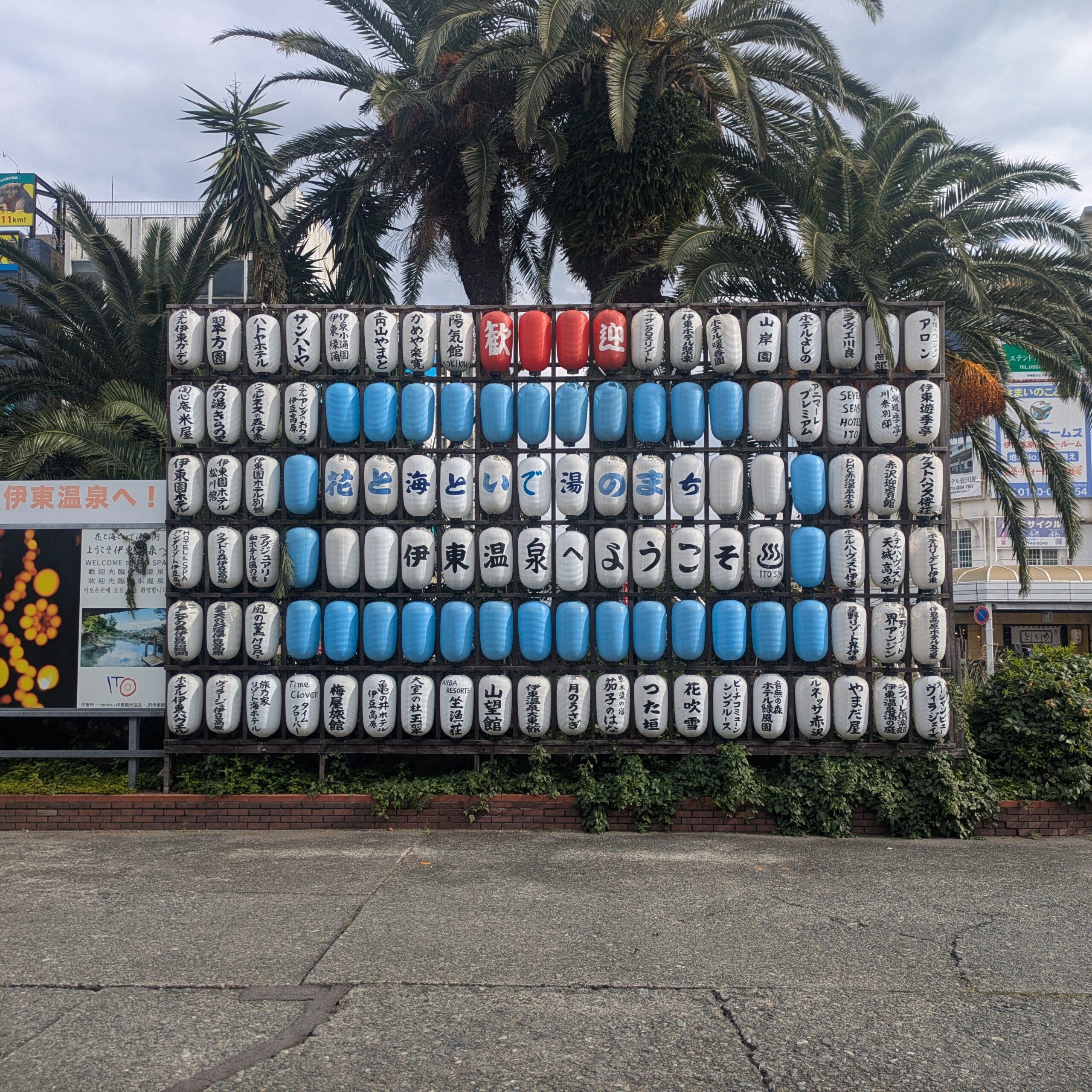
Just past the station, we found Yunohana Dori Shopping Street. If you’ve been searching for those rare, wonderfully preserved retro onsen towns that still exist just a short train ride from Tokyo, this is a place where time seems to have slowed down.
Shops with facades that haven’t changed in decades stand alongside quiet cafes with hand-painted signs. There are boarded-up buildings, too – a quiet reminder of the reality faced by many business owners worldwide in this current climate. I felt sadness for the business owners, wondering how they thrive with such minimal foot traffic, though I’m sure (and hopeful) that the “off-season” quiet we experienced is replaced by a busier rhythm in the height of summer.
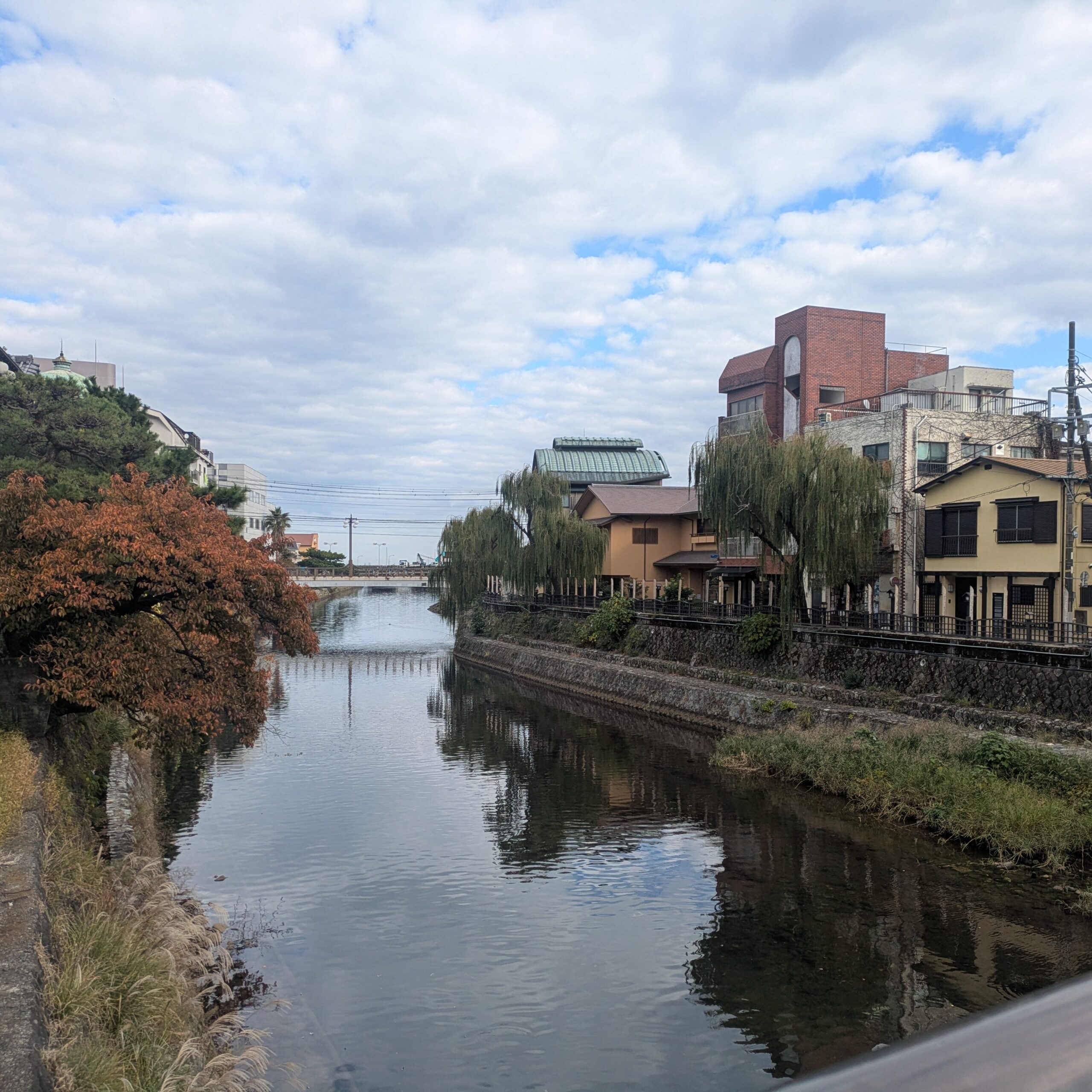
Turning off towards our accommodation, we took a slight detour to wander along the Matsukawa River. The sun was shining, and the slight sea breeze was sending the autumn leaves floating along the river. From here, I could see the harbour meeting the river mouth in the near distance, a final quiet view before the 100-year-old wooden facade of my accommodation came into view.
K’s House: A Century of Stillness
After slipping off our shoes and stepping into the provided slippers, the first thing you feel is the weight of the history in the air. It sounds like a cliché until you’re standing there, looking at those century-old wooden beams and feeling the give of the traditional tatami floors underfoot.
Originally built as a high-end ryokan, this building is now preserved as a heritage treasure, but without the exclusive atmosphere. Staying in a traditional inn can often be out of reach for a typical travel budget, but K’s House Ito Onsen offers that same experience—the architecture, the communal spaces, and the hot springs—without the extraordinary price tag. It’s a rare chance to exist inside a piece of history while keeping things simple and affordable.
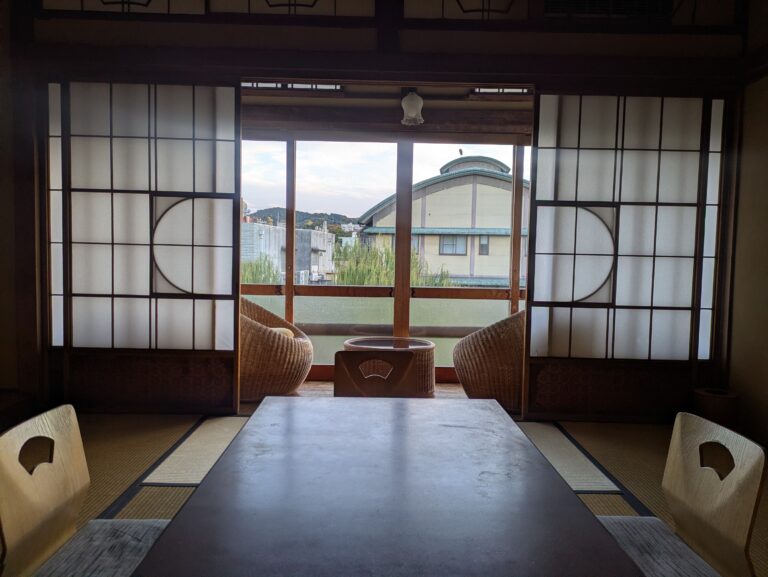
After an early check-in with our lovely host, we climbed the heavy wooden stairs to our room on the third floor. Sliding back the screen door, we were met with a view that instantly made the climb worth it: the same river we had just walked alongside, framed perfectly by our window.
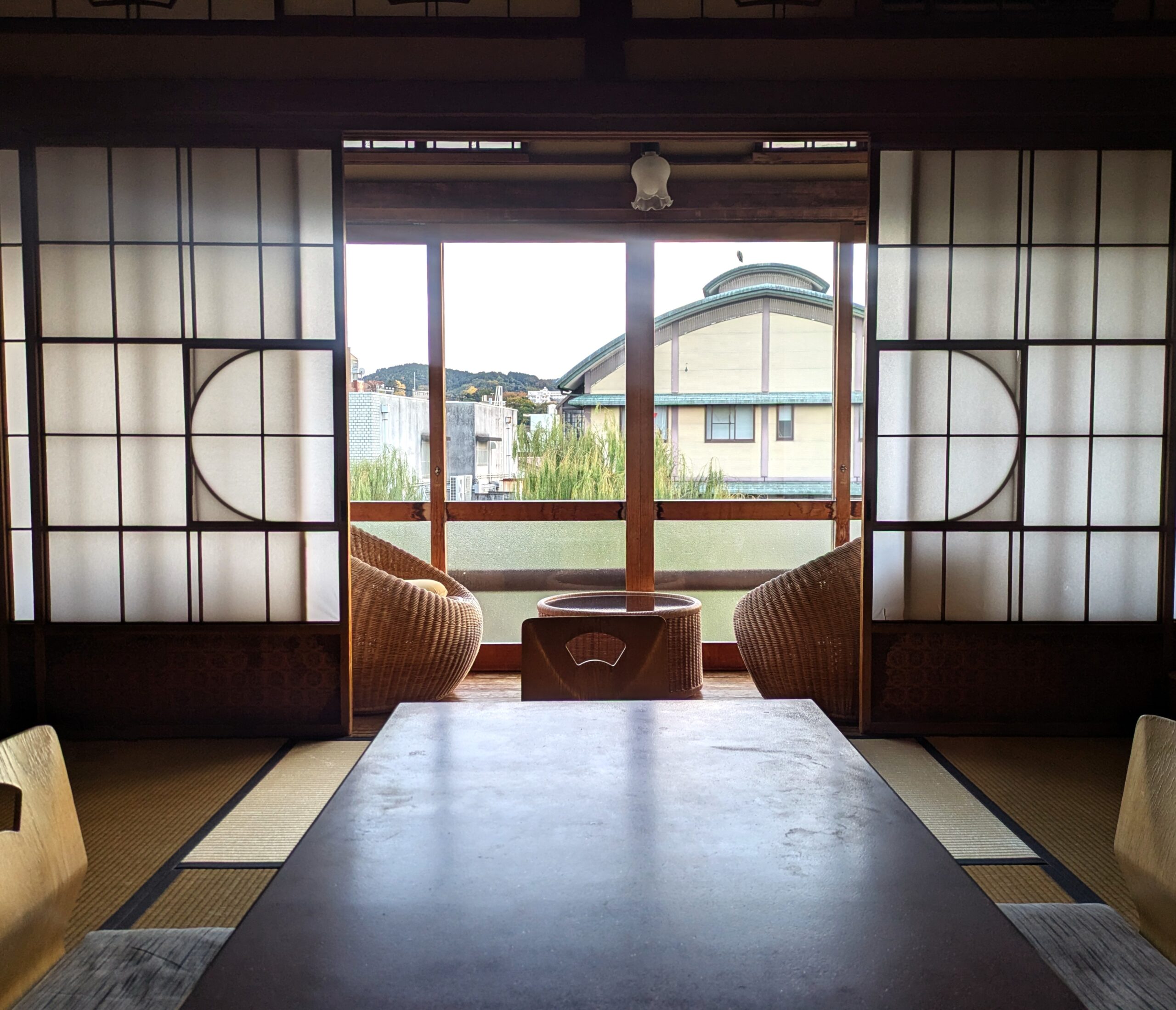
The room itself was everything you imagine a traditional Japanese space to be. The scent of the Tatami mats greeting us as we walked in the Genkan entryway, low dining table and floor cushions, a decorated Tokonoma alcove, and a beautiful screened in balcony with cane furniture set up perfectly to enjoy the view.
Once we had settled in, we were keen to check out the private onsen. Keeping with the relaxed vibe of K’s House, you don’t need to book ahead; you simply check the sign on the door. If it says “Vacant,” you slip inside and flip it to “Occupied.”
The water was heaven. There is a specific quality to mineral onsen water that a regular bath just can’t mimic. It feels silky and soft, with a heat that reaches right into your bones. It’s the kind of experience that leaves both your body and your mind feeling completely reset.

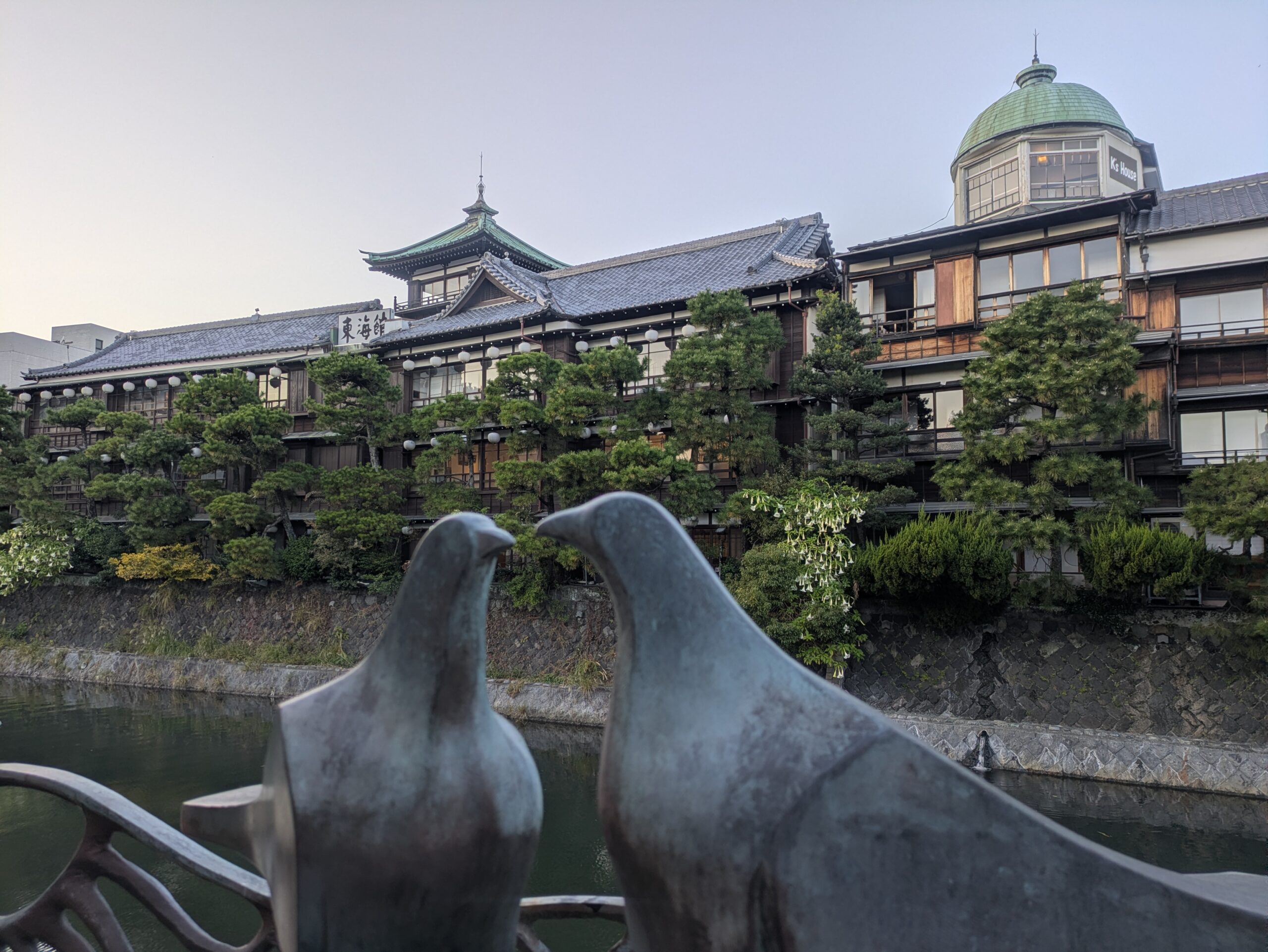
A quiet greeting outside: the sculptural birds keeping watch over the Matsukawa River with K’s House in the background
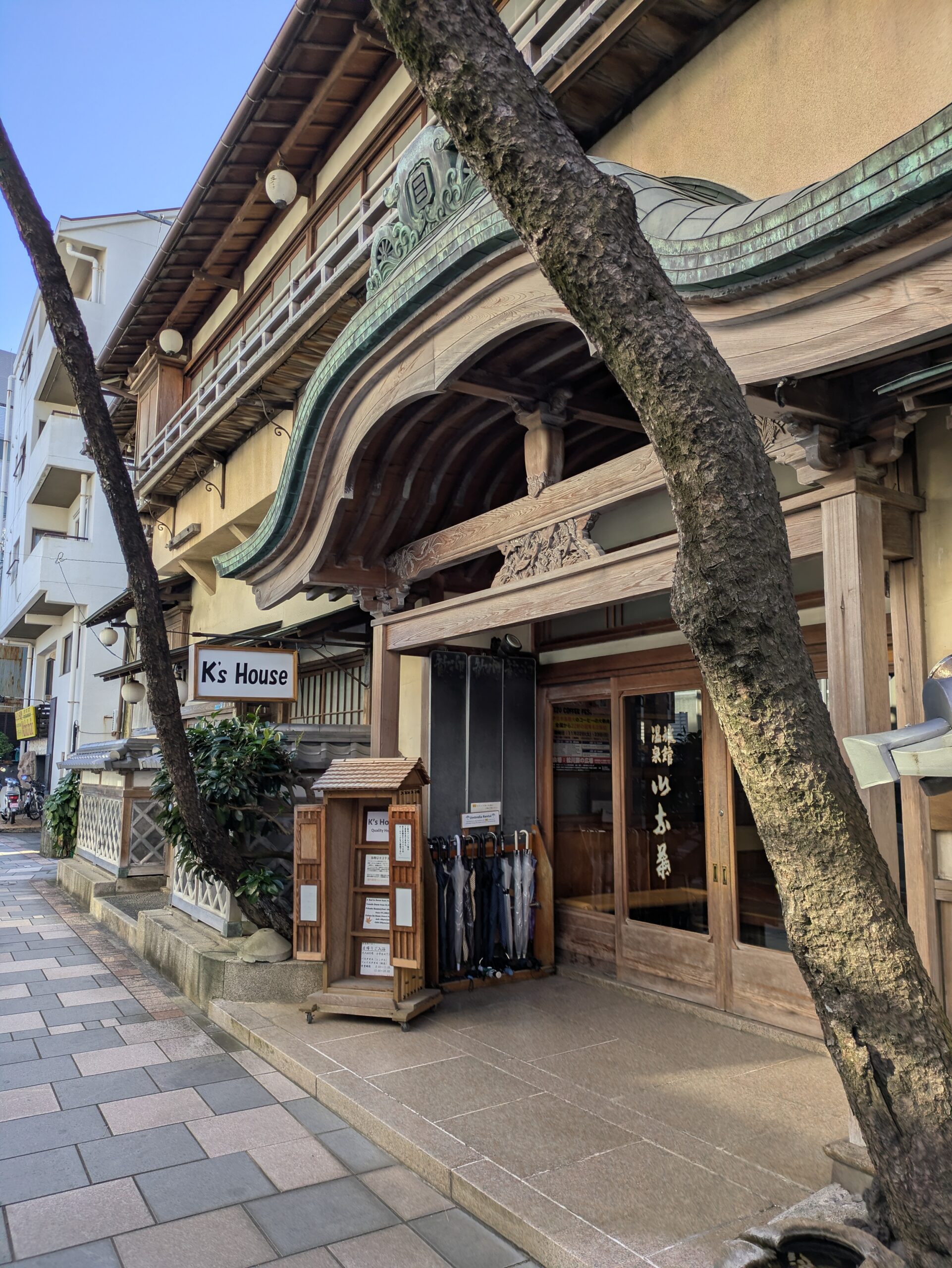
The weathered facade of K’s House, where a century of stories begins at the front door.
The geometry of peace—shoji screens, tatami, and the gentle light of an Ito afternoon.
The Harbor and the History
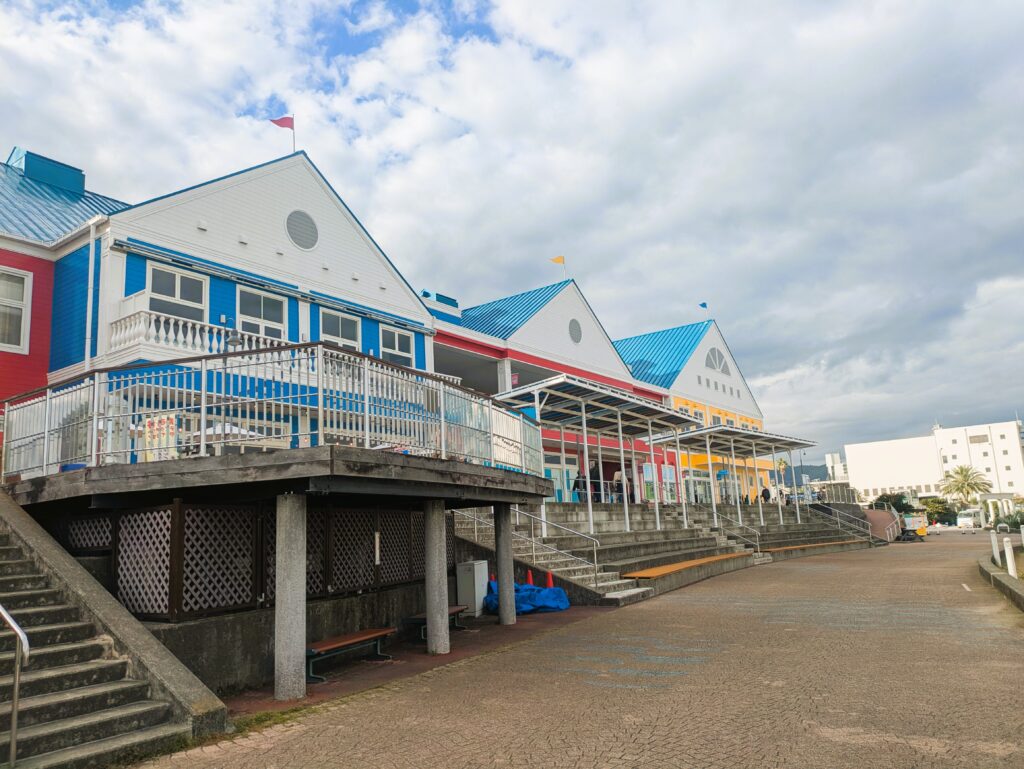
After a quick dip in the onsen, we felt refreshed and ready to see more of the town. We wandered back toward the station to catch the bus to Ito Marine Town, a vibrant, colorful seaside village filled with local shops and cafes. It’s a great spot for souvenir hunting, but also—true to Ito’s reputation—another place to rest your feet. There is a public foot bath facing the ocean where you can sit and watch the boats go by. While we were there, we watched a yacht being lifted from the platform and lowered into the bay, which was a pretty fascinating highlight for my eight-year-old to witness.
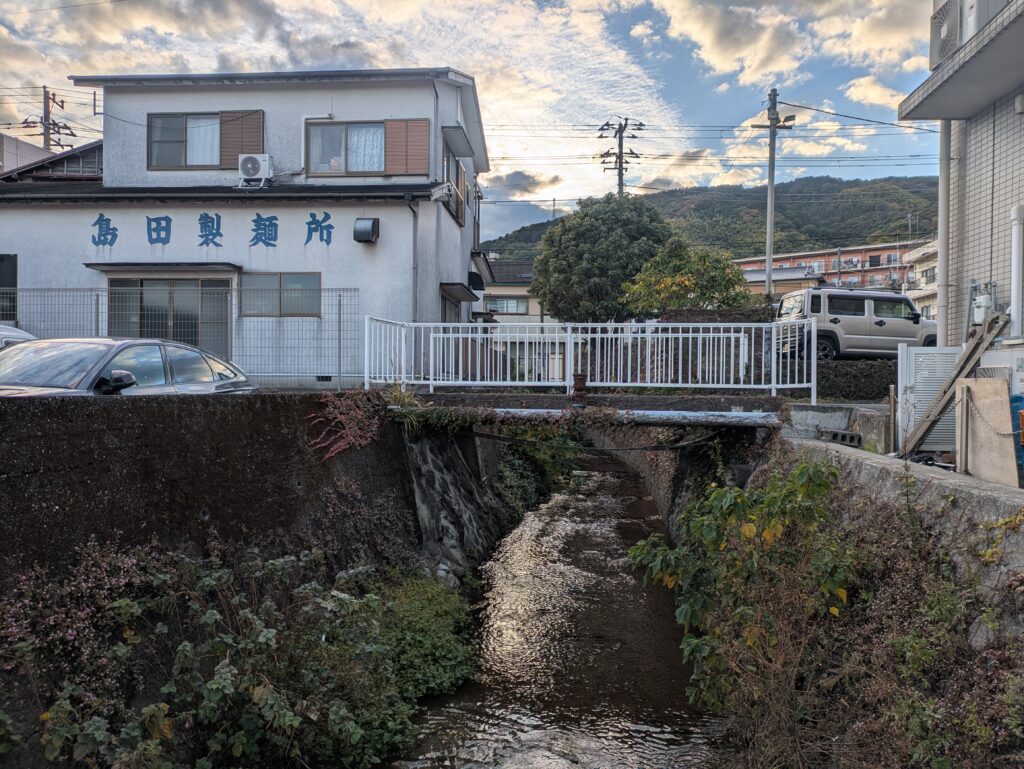
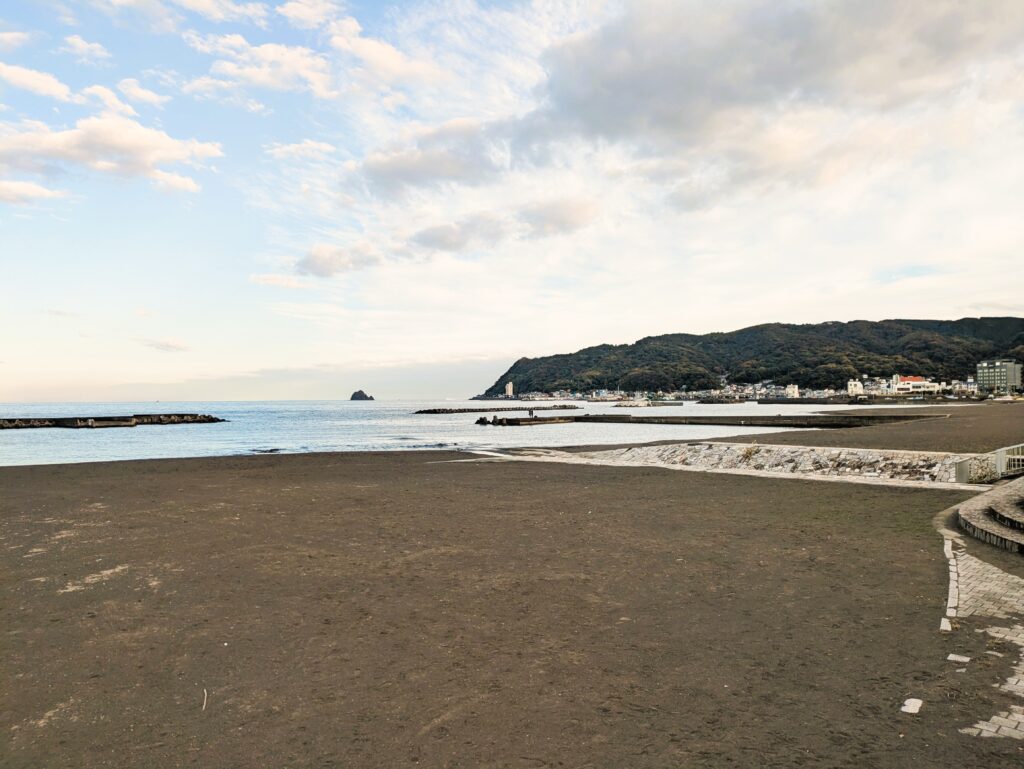
We decided to skip the lunch options there and instead wander the shoreline back toward a local Hama Sushi (a firm favorite for my son). I’ve always preferred taking the longer route; you never know what you might find when you move a little slower. We walked past residential houses with steam rising from nearby onsen vents and little waterways winding through the streets. After a stroll along the sand at Orange Beach, we came across an abstract statue of a ship and a man. Reading the signpost, we realized this was a monument to William Adams—the first Englishman to set foot in Japan in 1600. Known as Miura Anjin, he became Japan’s first foreign samurai and built the country’s first Western-style ships right here in Ito Bay. For those who have seen the show Shogun, this is the history that inspired the story of John Blackthorne, standing quietly right there on the edge of the water.
Colorful storefronts and seaside views at Ito Marine Town. Finding the quiet rhythm of Ito in its backstreets and waterways. A peaceful afternoon stroll along the sand at Orange Beach.
The Twilight Hour at Otonashi
Later in the afternoon, while my husband and son had another soak in the onsen, i decided to do what i do best: wander aimlessly until I find whatever it is I’m looking for. Walking along the river in the opposite direction of the beach, i was accompanied by the sounds of the water flowing, leaves rustling, and the occasional soft beeps-boops of the pedestrian crossing floating through the air.
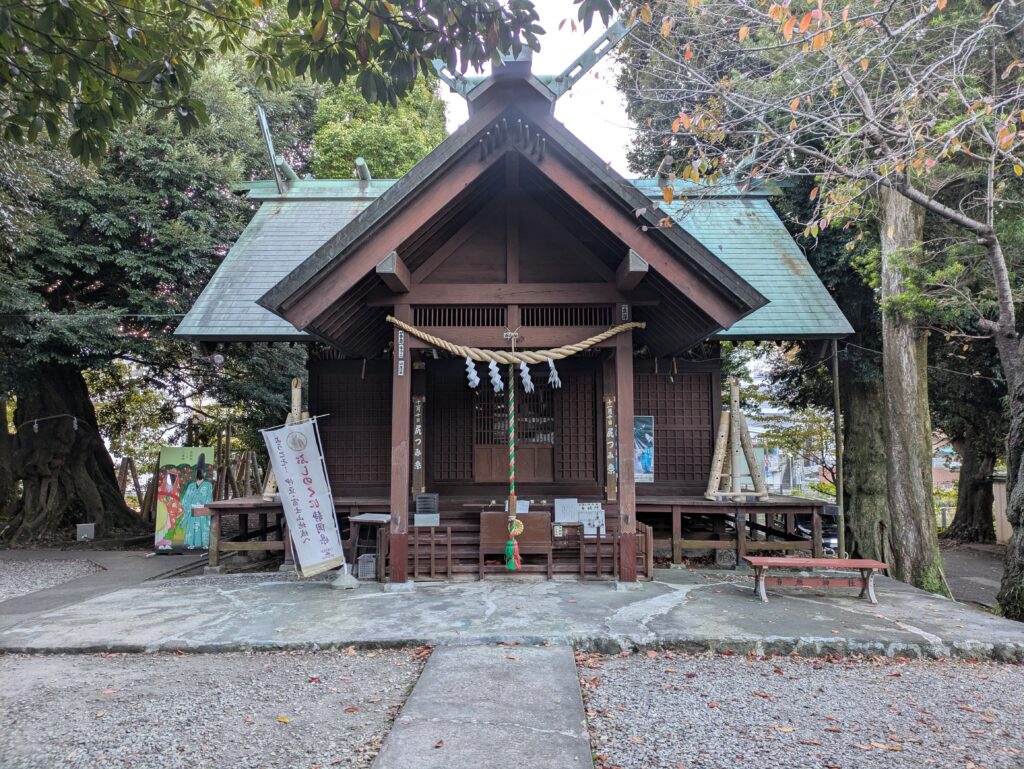
Lanterns, sculptures, and artwork lined the river, framed by the magnificent branches of trees draping over the walkway. I eventually found myself at a crossroad where I decided to take a left and start making my way back, i turned a corner and i found myself at a little hidden shrine: Otonashi Shrine. Dedicated to the goddess Toyotamahime, legend says she gave birth here, and even today, it is a place where people come to pray for safe pregnancy and childbirth. Standing there in the twilight by myself, watching the wind catch the wooden charms and making my own silent prayer for my pregnant friend back home, it felt like witnessing a very private, gentle side of Ito.
Dinner at Kunihachi
After fitting so much into not even a full day in Ito, we wanted somewhere close by for dinner. Sometimes I love to wander until a place “calls” to me, but with all of us tired and ready to settle in for the night, we turned to Google Maps. What a find it was.
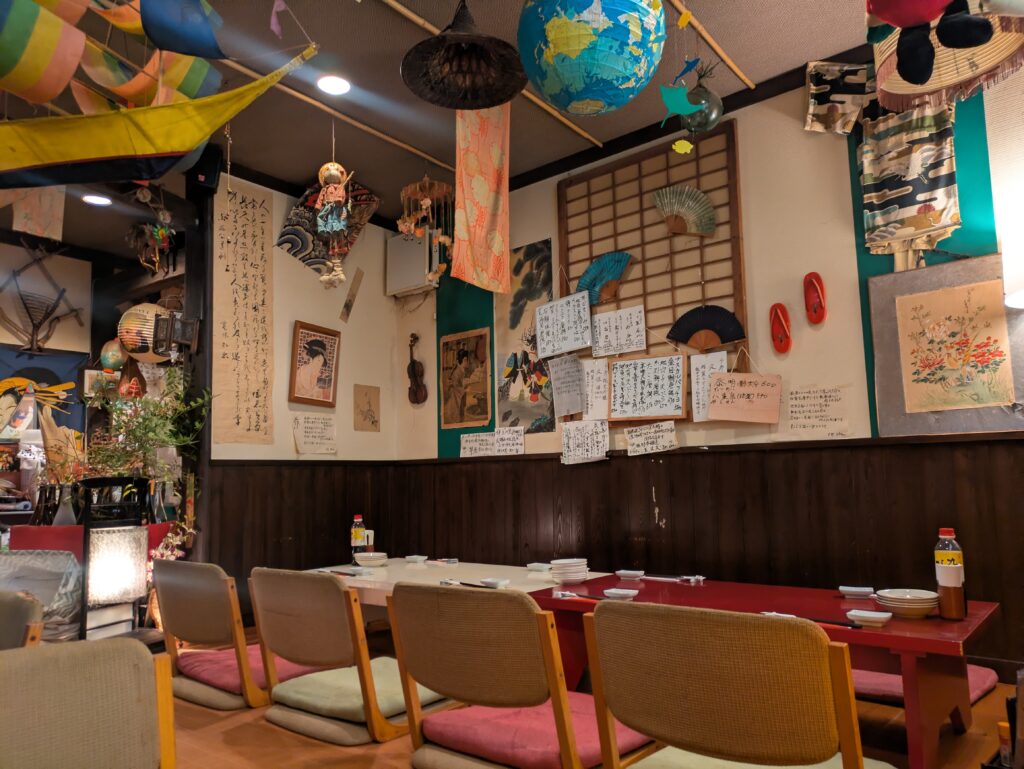
Kunihachi was eclectic, warm, and inviting—chaotic and calm all at once. This family-run Izakaya was everything we needed and more than we expected. The floor seating was cozy, the walls were lined with a large collection of drawings from previous patrons and interesting knick-knacks, and the service was wholesome and kind.
While there were set menus, we decided to choose a few random dishes to share. The sashimi was incredibly fresh, the yakitori was packed with flavor, and the eggplant in miso sauce was a standout highlight for us. But beyond the food, it was the warm, welcoming atmosphere that would have me coming back to Kunihachi if I ever find myself in Ito again.
The Final Word
When I was planning my itinerary for this trip, Ito was on, then it was off, then back on again. After this first day, I am so happy it kept its spot in the end. It has easily become one of my favorite “slow” places in Japan—somewhere I could truly see myself living if I were ever to make the move. Between the retro charm, the kitschy restaurants, the historical buildings, and the beautiful walks along the river, it has a way of pulling you in.
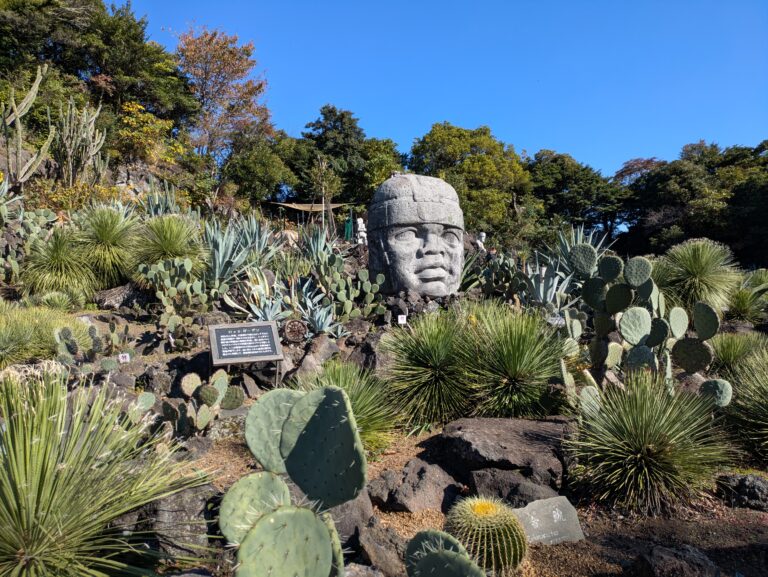
I spent two nights here in total, using the second day for trips just outside the town center. Ito was a perfect base for exploring Izu Kogen, making it easy to head out for a day at Mt. Omuro and the Izu Shaboten Zoo. But if I had my time again, I would probably stay three. It allows for those last-minute change – like little legs getting tired and having to cut the Jogasaki Coast from the itinerary. While you can do Ito in a day trip if you have to, you will miss out on so much of what this area has to offer if you don’t give it the time it deserves.
Follow the next footstep: Coastal Volcanos and Capybaras: A Day Trip to Mt. Omuro and Izu Shaboten Zoo.